

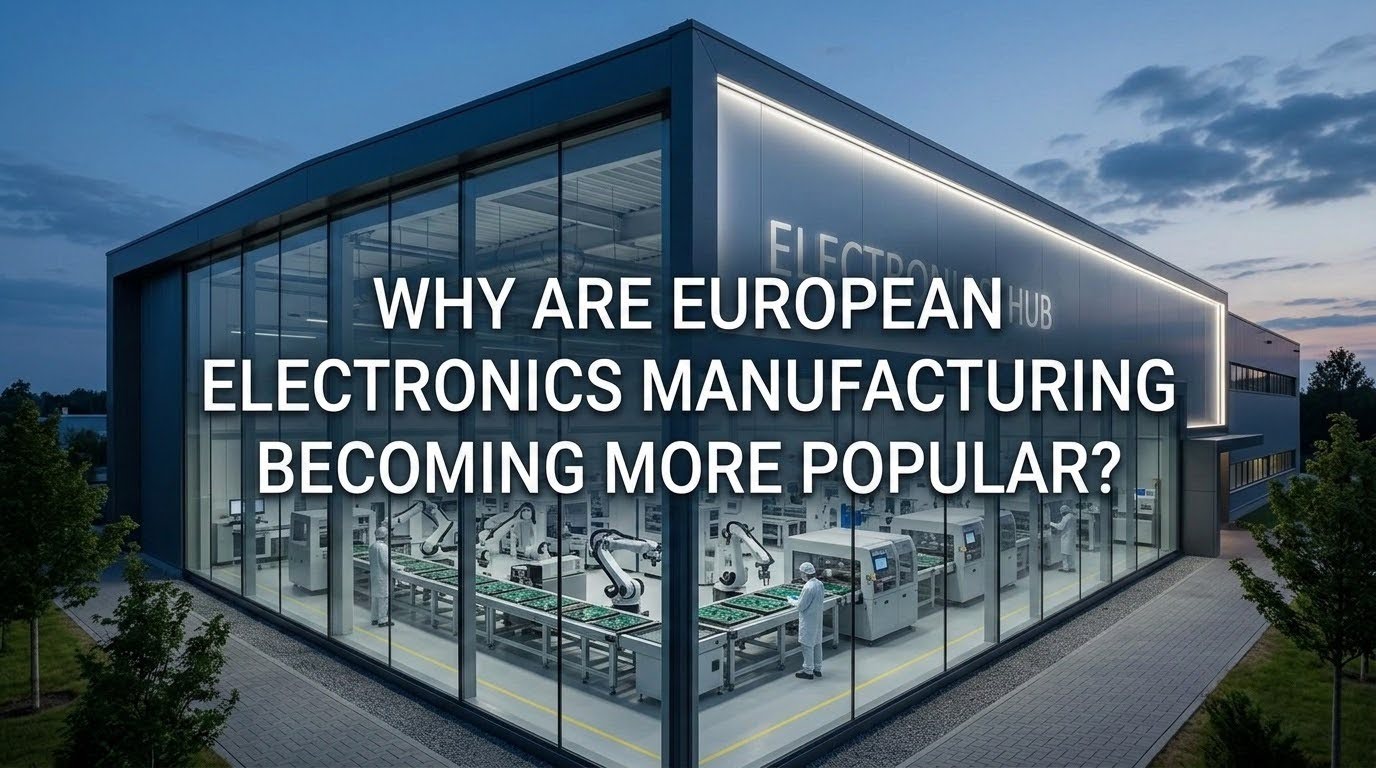
Supply chain executives spent the last two decades building an ecosystem heavily reliant on a single geographic region. That model worked incredibly well when freight was cheap and geopolitics were boring. Things look different today. American companies are aggressively rethinking where their products get built. Tariffs, shipping bottlenecks, and intellectual property concerns have fundamentally changed the math of offshore production.
We are seeing a massive shift of electronics manufacturing into Central and Eastern Europe. This isn’t just a backup plan anymore. It has become a primary strategy for companies that need technical competence without the risk profile of traditional Asian manufacturing hubs.
The Real Cost of Production
The conversation used to start and end with the per unit labor rate. If a factory overseas could build a board for three cents less, they got the contract. Now buyers have to calculate the total landed cost. That includes the risk of inventory sitting on a boat for an extra month or sudden import duties wiping out the profit margin on a consumer device.
European facilities operate with a different value proposition. Their labor rates are higher than Southeast Asia but significantly lower than the United States or Western Europe. What they offer is stability. You get predictable logistics routes and a regulatory environment that respects international business law. For a mid-sized hardware company launching a proprietary medical device or industrial sensor network, that legal protection alone often justifies a slight premium on the manufacturing floor.
Automotive Roots and Engineering Talent
You can’t just build a high tech manufacturing sector overnight. The countries currently winning this business spent the last thirty years acting as the industrial backyard for Germany and France. They built out massive automotive supply chains. The engineers and line workers cut their teeth on strict automotive quality standards.
That background translates perfectly to modern electronics. When North American buyers look for reliable PCB assembly Romania often comes up on the shortlist because of this exact automotive heritage. The region has the equipment and the trained workforce to handle high-mix runs that require tight quality control. The technical universities in these areas pump out mechanical and electrical engineers who speak fluent English and understand western business expectations.
Scaling Up High-Mix Production
One of the hardest things to find right now is a partner willing to handle complex projects that lack massive volume projections. Megafactories are optimized for millions of identical units. If you have a specialized product with a production run of ten thousand units, you’re going to get bumped down the priority list constantly.
European contract manufacturers have deliberately positioned themselves to capture this middle market. They invest heavily in flexible surface-mount technology lines that can switch between different products quickly. If a company needs high-precision PCB manufacturing Lithuania has become a completely viable alternative to sending that work across the Pacific. Their facilities are heavily automated. This reduces the dependency on raw headcount and minimizes human error during the fabrication process.
Integration and Complete Builds
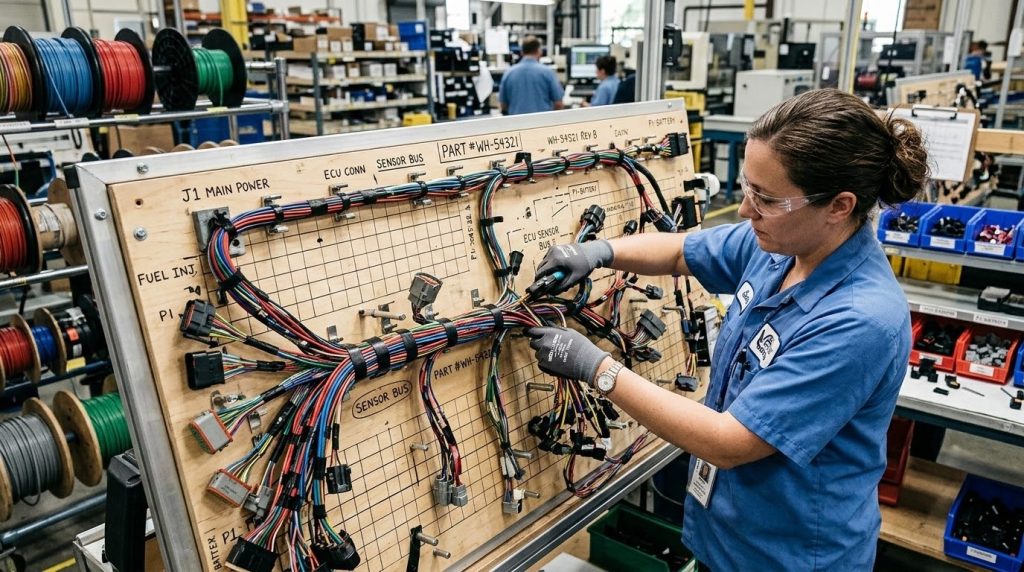
Building the bare board is only half the battle. Bringing the entire product together is where logistics usually break down. Shipping a populated board from one country, an enclosure from another, and cables from a third creates a scheduling nightmare. A single customs delay stops the entire final assembly line.
Buyers are getting smarter about vendor consolidation. They want partners who can do the surface mount work and then handle the mechanical integration under the same roof. This means sourcing facilities that can manage plastic injection molding, metal stamping, and custom Wire Harness Assemblies locally. European hubs excel at this because they sit inside a massive trading block. A contract manufacturer in Poland or Hungary can source specialized components from Germany overnight and keep the final assembly line moving.
Data Security and Intellectual Property
Hardware development today is just as much about software. Connected devices carry proprietary firmware, cryptographic keys, and sensitive user data. Handing that over to a facility with a track record of intellectual property leakage is a massive risk. We see companies spending millions on research and development only to have a cloned product hit the market before their official launch.
European manufacturers operate under strict legal frameworks regarding intellectual property and data protection. The legal recourse for stolen designs is well established. For defense contractors and industrial automation firms, this baseline level of security is mandatory. You don’t have to hire a local fixer to ensure your firmware isn’t walking out the back door on a thumb drive. The contract manufacturers enforce physical and network security themselves because a single breach would instantly destroy their reputation with American buyers.
Logistics and Communication Advantages
Don’t underestimate the value of working within a manageable time zone. Trying to manage a complex engineering change order with a twelve-hour time difference is exhausting. Someone is always taking a meeting at midnight. When American companies work with European partners, there is a solid overlap in the morning for the US East Coast and the afternoon for Europe. You can jump on a call, review a schematic, and get an answer before the end of your workday.
Freight routing to North America is also generally more straightforward. Air freight from Frankfurt or Warsaw into Chicago or New York is frequent and highly competitive. Ocean freight takes a bit longer than shipping out to the West Coast from Asia, but the routes are often less prone to the massive port bottlenecks we have seen in recent years.
Evaluating the Trade Offs
There is no perfect manufacturing location. Moving production to Europe requires adjusting your expectations. The raw material supply chain for certain electronic components is still heavily anchored overseas. Your European partner is likely still buying their passive components and integrated circuits from global distributors. You have to account for that transit time when planning your initial production schedules.
Tooling costs for injection molding also tend to be higher than what you would quote out of a budget tool shop. You are paying for European steel and labor. The upside is that the molds are usually built to a higher standard and the factory will actually maintain them properly over their lifespan.
Companies making the shift need to audit these facilities with a critical eye. Look closely at their component sourcing network. A good manufacturing partner should be completely transparent about where their raw materials come from and how they buffer against global shortages. If they brush off questions about their supply chain resilience, walk away. The entire point of moving production to this region is to build a more robust, reliable operation.