


Most teams celebrate when demand spikes. But anyone who has managed a hardware build knows that moving from a few hundred prototypes to thousands of units is where the real financial stress begins. You don’t just multiply your prototype costs by a thousand. Scaling breaks your initial processes. New bottlenecks emerge and the price tags attached to them are rarely built into the original budget. Let’s look at where the money actually goes when you ramp up manufacturing.
Component Sourcing and Minimum Order Quantities
In the early stages, you grab components from standard distributors. It works well enough for small runs and rapid prototyping. When you scale, you hit minimum order quantities. Factories do not sell microcontrollers or specialized sensors in batches of fifty. You might need 5,000 units for your current build but the manufacturer only sells in factory-sealed reels of 10,000. You are immediately forced to tie up cash in excess inventory that sits on a warehouse shelf.
Then there is the issue of supply chain diversification. Putting all your production in one facility is a massive risk. Smart operations look at alternative regions to spread that risk. Moving some volume to facilities handling PCB assembly Turkey offers a practical middle ground for reaching European markets while keeping freight times manageable. Balancing these regional shifts takes upfront capital and travel time to audit the new production floors properly.
Custom Tooling and Non Recurring Engineering
Prototyping skips the expensive setup phases because you are using off-the-shelf enclosures and manual assembly. Scaling forces you to pay for the real manufacturing infrastructure. Non-recurring engineering fees catch a lot of product teams off guard. When you move to a contract manufacturer, they have to program their pick and place machines, design custom solder paste stencils, and calibrate their reflow ovens specifically for your board layout.
If your product involves custom plastics or metal enclosures, injection molding tooling will easily cost tens of thousands of dollars before a single part is made. You pay this upfront. If you find a flaw in the design during the first large run, modifying that heavy steel mold is another massive expense that sets you back weeks.
The Price of Reliable Interconnects
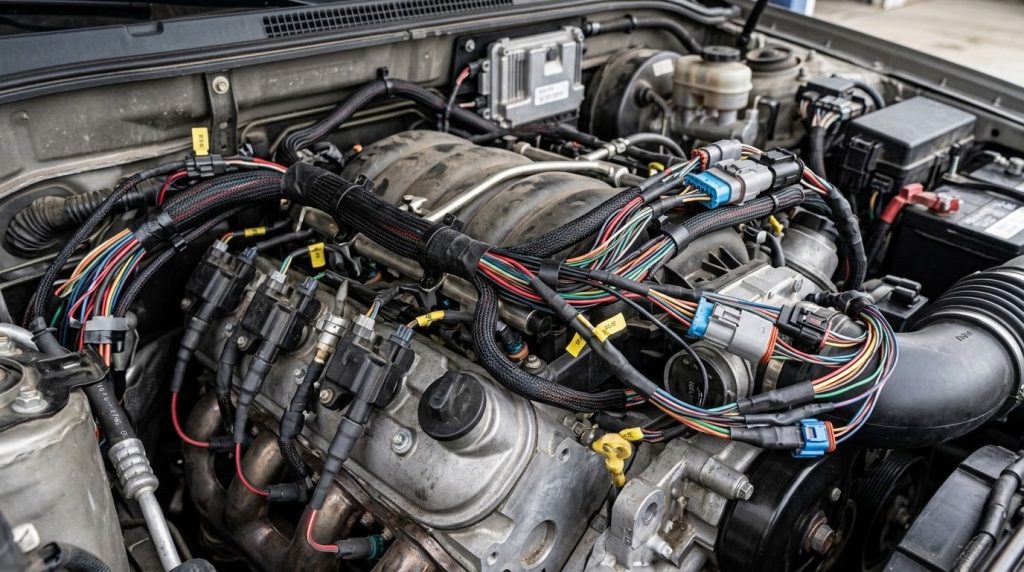
Connectors and cables are notorious failure points in hardware. Hand crimping cables work fine for a dozen units in a lab. At scale, manual assembly causes unacceptable defect rates. You need custom wiring looms that drop perfectly into the enclosure without pinching or requiring hand routing by the line workers.
This means you have to source a dedicated Electrical Wire Harness Manufacturer. Getting a custom harness made requires detailed technical drawings, custom tooling for the overmolding, and separate quality validation processes. It adds time to your timeline and thousands in setup costs. Skipping this step guarantees your final assembly line will crawl to a halt when workers struggle to fit generic cables into tight spaces.
Automated Testing Infrastructure
Plugging in a device and seeing if a green light blinks is fine for beta units. At scale, testing must be automated and highly consistent. You pay for the development of hardware test fixtures. These are custom boards with spring-loaded pogo pins that clamp down on your product, apply power, and run automated diagnostic scripts in seconds.
You also pay for the software engineering required to build those testing environments. If a board fails on the assembly line, you need to know exactly which component failed instantly. Without automated testing, your labor costs for troubleshooting will destroy your profit margin. Every minute a factory technician spends manually debugging a board costs you money you cannot recover.
Certifications and Regulatory Compliance
Selling products in volume usually triggers strict regulatory requirements. A prototype sitting on a lab bench does not need FCC certification. A product sitting on a retail shelf in the US absolutely does. Testing for electromagnetic interference, safety standards like UL, and specific industry certifications can cost between $10,000 and $50,000 depending on the complexity of the radio transmitters inside your device.
If you fail the initial lab test, you have to redesign the board, order new prototypes, and pay the testing lab fee a second time. This is why having localized engineering support makes sense. Some companies use regional partners, like working with groups such as WellPCB Spain, to handle localized compliance adjustments or quick-turn board revisions before submitting the final product to a major testing lab.
Yield Loss and Scrap Rates
No factory produces a 100 percent perfect yield. When you scale, you have to pay for the garbage. A normal yield rate for a mature product might be 98 percent. If you are building 10,000 units, that means 200 of them will end up in a scrap bin or require expensive rework.
During your first major production run, that yield rate might only be 85 percent as the factory learns how to build your specific device efficiently. You still pay for the components on those dead boards. The material cost of yield loss is a permanent line item you have to absorb. Sometimes a component is so cheap that it makes more financial sense to throw the entire assembled board in the trash rather than paying a technician fifteen dollars in labor to desolder and replace a two-cent resistor.
Freight and Warehousing Logistics
Shipping small boxes via air freight is fast and predictable. Moving pallets of finished goods by ocean freight introduces a completely different economic reality. You are now dealing with container costs, customs brokers, port fees, tariffs, and marine insurance. Pallets get dropped by forklifts. Containers get delayed at the port for random inspections.
Once the product lands, it has to go somewhere. Warehousing costs scale linearly with your physical volume. If your sales velocity does not match your manufacturing output, you are paying monthly rent on pallets of plastic and silicon. You have to factor in the carrying cost of inventory. Moving physical objects across the world and storing them requires continuous cash flow that most teams underestimate during the initial planning phase.