

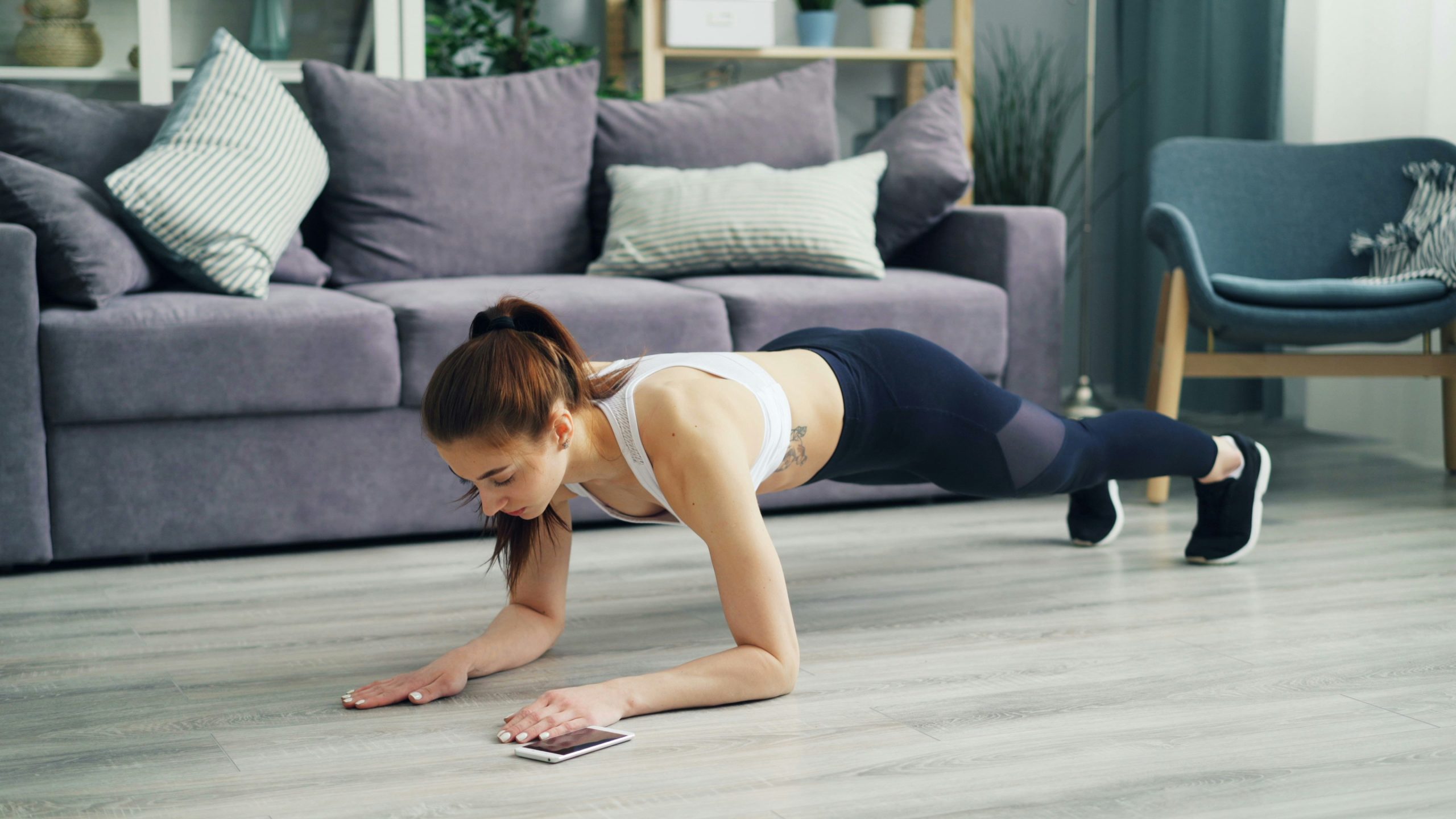
By the time you finish reading this sentence, you could have done approximately zero exercise. But don’t worry, we’re about to change that.
Let me paint you a picture. It’s a Tuesday evening. You’ve just finished work. You’re slumped on the sofa in what experts call “the horizontal position.” Your phone is in your hand, and your will to live is somewhere behind the cushions. The government recommends 150 minutes of moderate exercise a week, which sounds lovely if you’re a Labrador retriever with infinite energy and no job.
But here’s the plot twist that has the medical community quietly losing its mind: five minutes a day might be enough.
Yes, you read that right. Five minutes. That’s one episode of The Office intro. That’s waiting for your microwave to defrost something. That’s roughly the amount of time you spend scrolling past exercise videos on TikTok before deciding tomorrow is definitely the day you’ll start.
According to a landmark study published in The Lancet in January 2026, adding just five minutes of moderate to vigorous activity to your daily routine could prevent up to 10 percent of premature deaths among the general population. That’s millions of people. Millions living longer because they walked up the stairs instead of taking the lift.
And if you’re among the least active 20 percent of the population, the “I get my steps in from the sofa to the fridge” crew, the benefits are even more dramatic.
Welcome to the glorious, lazy person’s guide to longevity. No gym membership required. No spandex. No judgment.
The Study That Changed Everything (Or: Science Finally Gets Real)
Researchers from the Norwegian School of Sport Sciences did something revolutionary. They didn’t ask people to run marathons or join CrossFit cults. They didn’t demand you wake up at 5am for a “sunrise flow session.” Instead, they analysed data from more than 135,000 adults across the United States, Sweden, Norway, and the United Kingdom.
Here’s the clever bit: they used tracking devices to measure actual movement. Not self-reported “oh yes, I definitely exercised this week” nonsense people tell themselves to feel better. Real data. From real people. Over an average of eight years of follow-up.
The results made the entire medical establishment sit up and pay attention.
Adding five minutes of moderate to vigorous activity per day was estimated to prevent up to 10 percent of deaths among everyone except the already super-active. Adding ten minutes? That jumped to 15 percent.
Ulf Ekelund, the lead author and a professor of physical activity and health at the Norwegian School of Sport Sciences, told the BBC he was genuinely surprised. “It was surprising that very small changes in physical activity of five minutes per day have such a large impact on reducing the risk for premature mortality,” he said.
When scientists are surprised, you know something interesting is happening.
But What Counts As “Moderate to Vigorous”? (The Good News)
Here’s where it gets properly exciting. You don’t need to buy a Peloton. You don’t need to join a running club where everyone somehow looks effortlessly aerodynamic while you resemble a startled pigeon.
Moderate activity is anything that raises your heart rate and makes you breathe harder. The NHS’s Birmingham Women’s and Children’s site defines it as “enough to lift your heart and breathing rate and make you feel a bit warm”.
Vigorous activity is when you can only say a few words without pausing for breath.
Here are examples you can actually do without changing your clothes:
- Brisk walking (the “oh no, the bus is coming” pace)
- Taking the stairs (even two flights count)
- Power-walking to the kettle (we’ve all been there)
- Playing actively with children (chasing a toddler is basically interval training)
- Carrying heavy shopping bags (finally, a use for that sixth bag of potatoes)
- Mowing the lawn (gardeners, you’re welcome)
- Dancing (even if it’s just the “waiting for the microwave” boogie)
A Taiwanese medical site even suggested 快走趕捷運 – brisk walking to catch the MRT – as a perfect example. If you’ve ever sprinted for a train while holding a coffee and a bag of groceries, congratulations. You’ve exercised.
Professor Minxue Shen from Central South University in China put it perfectly: “You don’t have to run marathons or go to the gym for hours. Even 15 to 20 minutes of vigorous activity spread throughout the week in short bursts was associated with meaningful risk reductions.”
Fifteen to twenty minutes. A week. That’s less time than you spend deciding what to watch on Netflix.
The “Exercise Snack” Revolution (Yes, That’s the Actual Term)
The idea is simple. Instead of blocking out an hour at the gym (which you will never do), you sprinkle tiny bursts of activity throughout your day. A minute here, two minutes there. By the end of the day, you’ve accumulated meaningful movement without ever feeling like you “exercised.”
A 2025 study of nearly 100,000 people published in the European Heart Journal found that people who added short bursts of vigorous activity had dramatically lower risks of serious diseases. We’re talking:
- 63 percent lower risk of developing dementia
- 60 percent lower risk of type 2 diabetes
- 46 percent lower risk of dying
That’s not a typo. Sixty-three percent lower dementia risk. Just from making some of your daily movement a bit more intense.
“We expected that higher-intensity activity would be beneficial,” said Dr. J. Sawalla Guseh II, a sports cardiologist at Harvard Medical School, “but we were struck by how much more important intensity was than total volume for certain diseases.”
Intensity matters more than quantity. That’s the headline. That’s the bit you need to remember.
Sitting Is the New Smoking (But Worse, Because It’s Cosy)
Here’s the flip side. The study also looked at what happens when you don’t move. Spoiler: it’s not good.
Reducing daily sitting time by just 30 minutes was linked to a 7 percent reduction in early death across the population. For people who sit more than 11 hours a day (that’s roughly 70 percent of us), cutting 30 minutes of sitting reduced death risk by 10 percent. Cutting 60 minutes? A staggering 60 percent risk reduction.
Sixty percent. From standing up and walking around for an hour.
This is important because, as Ekelund noted, “physical inactivity is a leading cause of chronic disease and an earlier death.”
And here’s the thing. You don’t have to go from “sofa enthusiast” to “triathlete” overnight. The study found that health benefits have a “边际递减效应” – a diminishing returns effect. In plain English: the biggest benefits come from the first few minutes of activity. The jump from zero to five minutes is enormous. The jump from sixty to sixty-five minutes? Not so much.
So stop aiming for perfect. Aim for something.
But What About the Official Guidelines? (The 150-Minute Elephant in the Room)
Now, before you cancel your gym membership and declare yourself “functionally fit,” let me be clear. The World Health Organization still recommends 150 minutes of moderate activity per week. The NHS agrees. The NHS Scotland guidelines say the same thing.
Five minutes is not a replacement for proper exercise. It’s a replacement for nothing.
“Adults should still strive for the World Health Organization’s recommendation of 150 minutes of moderate-intensity exercise a week,” Ekelund told the BBC. “But the study shows that those who might struggle to go to the gym or join a sports club can still benefit from adding more movement into their lives.”
Think of it this way. 150 minutes is the gold medal. Five minutes is the participation trophy. And you know what? A participation trophy is infinitely better than no trophy at all, especially when the prize is “not dying prematurely.”
How to Actually Do This (Without Becoming Annoying)
Here are three stupidly simple strategies that require zero willpower, zero equipment, and zero personality change.
Strategy 1: Make Convenience Slightly Inconvenient
Park at the far end of the car park. Get off the bus one stop early. Take the stairs instead of the lift, even just one floor counts. Walk to the shop instead of driving. Every time you choose the slightly harder option, you’re adding minutes to your life.
Strategy 2: Stack Activity onto Existing Habits
While your coffee is brewing, do ten standing calf raises. While you’re on a work call, pace around the room. While you’re waiting for the microwave, march on the spot. You’re not “exercising.” You’re just existing slightly more vigorously.
Strategy 3: Set a “Get Off Your Arse” Alarm
Set your phone or smartwatch to remind you every 60 minutes of sitting. When it goes off, stand up. Walk to the kitchen. Get water. Walk back. That’s it. That’s the workout.
Ekelund’s advice is refreshingly sensible: “Start slow and gradually build up the amount. The activity should be tailored to the individual’s preferences and ability.”
In other words, don’t be a hero. Just be slightly less sedentary than you were yesterday.
A Word of Caution (Because We Have To)
The studies are observational. That means they show a strong association between movement and longevity, but they don’t definitively prove that five minutes of exercise causes you to live longer. Healthier people might simply be more capable of vigorous activity in the first place.
The study also wasn’t very racially diverse – the sample was mostly people of European ancestry. And vigorous activity might not be safe for everyone, especially older adults or people with certain medical conditions.
So, you know, don’t sprint for a bus if you have a heart condition. Consult a doctor. Use common sense. The usual boring but important caveats apply.
The Verdict (Or: Why You Have No Excuses Now)
Look, I’m not going to pretend that five minutes of walking will turn you into a supermodel or cure all your problems. It won’t. Life is more complicated than that.
But here’s the thing. Physical inactivity is a leading cause of chronic disease and early death. And the biggest barrier for most people isn’t laziness. It’s time, motivation, the overwhelming feeling that exercise has to be A Thing – something you schedule, prepare for, and feel guilty about not doing.
This research destroys that excuse.
Five minutes is nothing. Five minutes is brushing your teeth. Five minutes is waiting for your laptop to boot up. Five minutes is the amount of time you just spent reading this article.
As Nicole Logan, an assistant professor of kinesiology at the University of Rhode Island, told the BBC: “We know that physical function, muscle strength, muscle quality, bone strength – these are really good predictors of later life mortality. So living longer and living healthier for longer.”
You don’t need to be an athlete. You don’t need to be young. You don’t need to be thin. You just need to move. A little. Every day.
So here’s your challenge. Right now. Stand up. Walk to the kitchen. Get a glass of water. Walk back. Congratulations. You’ve just added minutes to your life.
Now if you’ll excuse me , I need to take my own advice. My sofa is calling. But first, five minutes of pacing. I mean it this time.
by THOMAS BURNS