

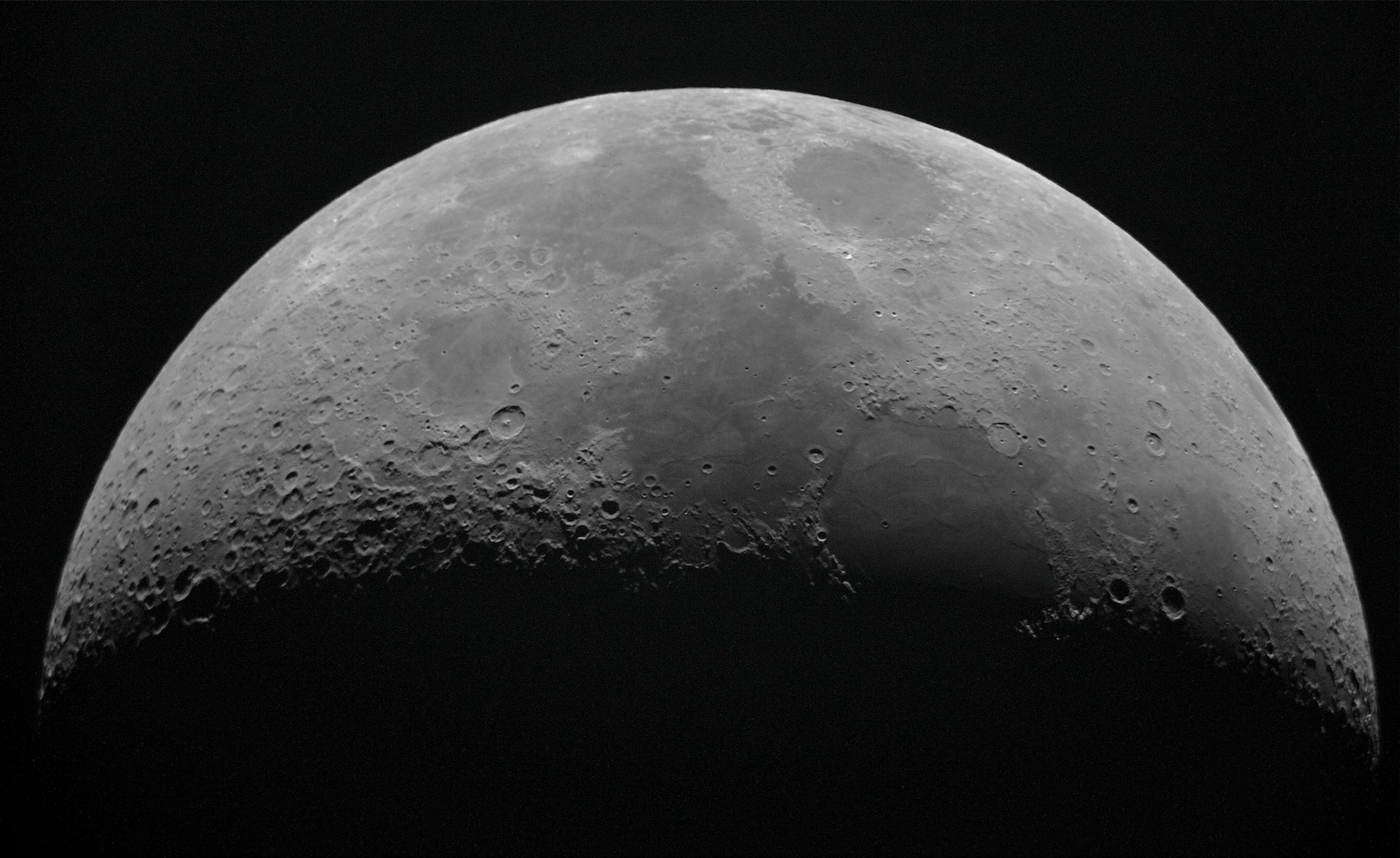
China is about to dispatch one of its astronauts to the Tiangong space station for an entire year – a national record – as it gathers vital physiological data for its ambitious goal of landing a crew on the Moon by 2030.
The Shenzhou-23 mission is scheduled for lift-off at 11:08pm GMT on Sunday (1508 GMT) aboard a Long March-2F Y23 rocket from the Jiuquan Satellite Launch Centre in north-western China .
The three crew members include payload specialist Li Jiaying, a former Hong Kong police inspector who will become the first astronaut from the city to join a Chinese space mission. She is also the first woman from the fourth batch of Chinese astronauts to fly in space. The crew is commanded by Zhu Yangzhu, a航天飞行工程师 (spaceflight engineer) who previously flew on Shenzhou-16, alongside pilot Zhang Yuanzhi .
While all three will reach the station, one will remain aboard for a full 12 months, one of the longest单人太空 missions ever attempted, though it falls short of the 14.5-month record set by a Russian cosmonaut in 1995. Officials from the China Manned Space Agency (CMSA) said on Saturday that the decision on who stays the year will be made later, depending on how the mission unfolds.
Race to the lunar south pole
The launch comes amid an increasingly tense space rivalry with the United States. Both nations have set their sights on the lunar south pole, where deposits of frozen water could be used for life support and rocket fuel.
NASA is aiming for a crewed lunar landing in 2028, two years ahead of China’s target, as part of its Artemis programme. However, experts have warned that the US may already be falling behind. NASA Administrator Jared Isaacman conceded in April that “recent history suggests we might be late,” while an analysis in the Hindustan Times argued that for all the pageantry of the Artemis II mission, “Washington is trailing Beijing” .
China, in contrast, has taken a steady, government-led approach. It has already demonstrated key technologies that the US is still working to perfect. In February, Beijing successfully tested an in-flight abort system for its Mengzhou crew capsule, a capability NASA’s Space Launch System rocket lacks. Last year, China validated the Lanyue manned lander in simulated lunar gravity, proving its ability to both descend to the surface and lift off again.
How Tiangong supports the Moon goal
Speaking at a news conference on Saturday, CMSA officials explained how the Tiangong space station is directly supporting the lunar ambitions. The station serves three critical functions :
- Crew experience: It is building a corps of astronauts with long-duration flight experience, providing a talent pool for future lunar missions.
- Technology verification: Experiments conducted aboard Tiangong, such as recent fuel tank fluid dynamics tests, are validating the designs of lunar spacecraft.
- Hardware commonality: The new-generation Mengzhou spacecraft and Long March-10A rocket being developed for the space station share a common design with their lunar counterparts, allowing for rapid iteration and risk reduction.
A permanent lunar base – with nuclear power
A successful crewed landing before 203 would serve as a precursor to an even more ambitious goal: a permanent International Lunar Research Station (ILRS) near the south pole, to be built in partnership with Russia by 2035 . The ILRS is viewed as a direct rival to NASA’s Artemis base.
To power this outpost through the Moon’s 14-day-long nights, when solar panels are useless, China and Russia are jointly developing an automated nuclear reactor. Russia, which has considerable experience in space-based nuclear systems, is leading the technology effort. Wu Weiren, chief designer of China’s lunar programme, has described Moscow as “ahead of the United States” in this field.
The ILRS is also an international project. Under the so-called “555 Project”, China aims to bring on board 50 nations, 500 research institutions and 5,000 overseas scientists, serving as a soft-power counterweight to the US-led Artemis Accords.
Artificial embryos and autonomous docking
The scientific agenda for Shenzhou-23 extends far beyond lunar preparation. Researchers will examine the physiological effects of radiation, bone density loss and psychological stress during the extended mission. In a pioneering experiment, China has already sent human stem cell samples to the station aboard the previous Shenzhou-22 mission to study the world’s first “artificial human embryo” in space, probing the long-term survival and reproduction of humans beyond Earth .
The Shenzhou-23 flight will also carry out the first autonomous rapid rendezvous and docking procedure with Tiangong’s core module. This manoeuvre directly rehearses the automated lunar-orbit link-up that will be required between the Mengzhou crew capsule and the Lanyue lander during a Moon mission .
Proving the hardware
China has already sent only robotic probes to the lunar surface, but it is rapidly closing the gap. In June 2024, it became the first nation to return samples from the far side of the Moon. Later this year, the Chang’e-7 robotic mission will explore the lunar south pole, carrying a novel rocket-propelled scout designed to reach terrain inaccessible to conventional rovers.
On the ground, China has built a 150-metre-high gantry in Hebei province to test the Lanyue lander in simulated one-sixth gravity, a facility reminiscent of the Apollo era. The lander, capable of carrying two astronauts and a small rover, has already completed months of successful test drops.
“The Chinese lunar program’s chief scientist has said Beijing’s public timeline is intentionally conservative,” notes one report. With all the pieces of the puzzle now seemingly in place, the Mengzhou spacecraft, the Lanyue lander, the Long March-10 heavy-lift rocket and a new-generation spacesuit, China’s goal of planting its flag on the lunar surface before the end of the decade appears increasingly plausible.
by PETER HAMPTON
Sources: Reuters, The Jerusalem Post, Hindustan Times, China Manned Space Agency, Chinese Space Science and Technology, Deutsche Welle, Cité de l’espace