

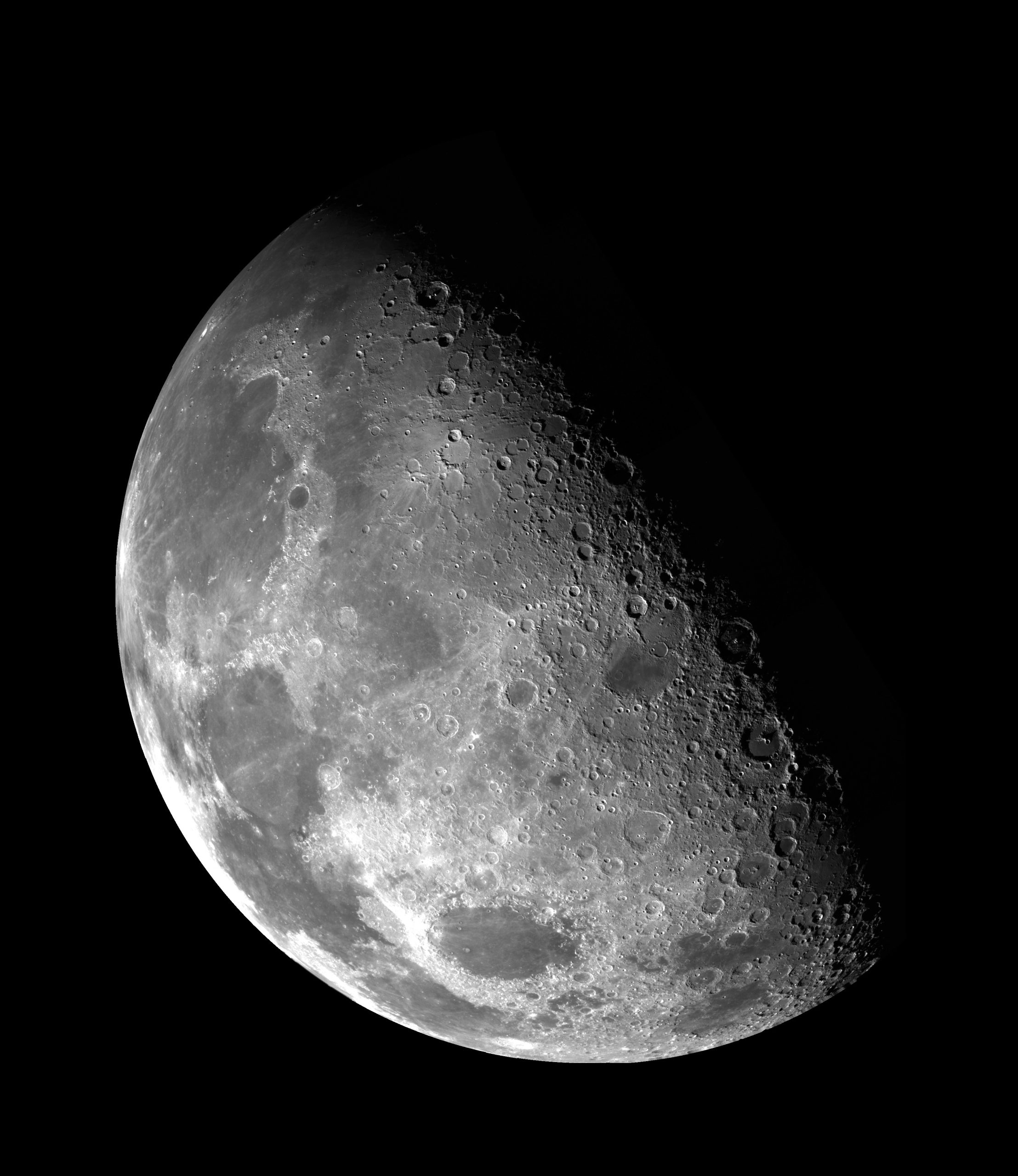
Firefly Aerospace’s Ocula service marks the first time an edge AI platform will process data in lunar orbit, transforming how we explore and utilize the Moon.
In March 2025, Firefly Aerospace’s Blue Ghost Mission 1 lander made a successful landing on the lunar surface, sending back almost 120 gigabytes of raw images and video to Earth. Scientists are still working through that data today. The sheer amount of information from just one mission shows a major bottleneck in space exploration: the long delay between collecting data and actually getting useful insights from it.
The upcoming Blue Ghost Mission 2, which is set to launch in late 2026, is aiming to fix this issue by putting artificial intelligence directly into lunar orbit. For the first time ever, an edge AI platform—NVIDIA’s Jetson—will be operating around the Moon, running Firefly’s Ocula imaging service to process data in real time. It will pull out the most important information and only send back what matters most to Earth.
This article takes a look at this new mission, the technology behind it, and what it could mean for the future of exploring and using the Moon.
The Problem with Space Data
Traditional space-based sensing follows a painfully slow pipeline. Sensors gather huge amounts of data, but the radio bandwidth between the Moon and Earth is very limited. The data has to be sent down over slow connections, which can mean it takes weeks or even months to process and analyze everything using computers on Earth.
As Firefly CEO Jason Kim explained, the goal is to change this paradigm: “We believe in a future where all AI processing and sensing will happen in space… connect all these different orbital constellations to enable something greater than any individual constellation”.
Ocula: The First Commercial Lunar Imaging Service
Ocula is designed to be the first commercial lunar imaging and mapping service available on the market, arriving at a critical moment when government-owned satellites in lunar orbit are nearing the end of their operational lives. According to Kim, “Ocula is set to be the first commercial lunar imaging and mapping service available on the market, and it’s coming at a critical time when other government-owned satellites in lunar orbit are nearing end of life”.
The service runs on high-resolution telescopes built by Lawrence Livermore National Laboratory, which are equipped with an NVIDIA Jetson module. These instruments are built into Firefly’s Elytra orbital vehicle, which will stay in lunar orbit for about five years, capturing continuous images.
Processing at the Speed of Discovery
By running AI inference directly on orbit with NVIDIA Jetson, Firefly can dramatically compress the timeline from data collection to insight. The Ocula sensor will gather images across ultraviolet and visible spectrum bands, then quickly process this data right onboard Elytra and send it back to Earth on its own.
“Modern space missions generate massive volumes of data that require immediate processing to overcome the latency and bandwidth constraints of deep-space communications,” said Deepu Talla, vice president of Robotics and Edge AI at NVIDIA. “Integrating the NVIDIA Jetson platform into Firefly’s Elytra spacecraft enables autonomous, on-orbit AI processing that transforms raw lunar imagery into actionable insights in real time”.
Applications: Mapping, Minerals, and Monitoring
Ocula supports a range of use cases that will help humans explore the vast possibilities of space:
- Landing Site Mapping: High-resolution imagery with fine-grained surface details for future human and robotic missions
- Mineral Detection: Identifying unique lunar mineral compositions such as ilmenite, which indicates the presence of helium-3 and could prove vital for future energy applications
- Situational Awareness: Monitoring infrastructure, vehicles, and operations occurring on the lunar surface
- Cislunar Domain Awareness: Tracking maneuvering objects and providing timely awareness of space operations in the Earth-Moon region
From Orbital Pilots to Operational Missions
The deployment of Jetson in lunar orbit is not a leap of faith. It builds on a series of successful orbital pilots that have shown commercial GPUs are ready for space. In August 2024, the first space-hardened NVIDIA AI GPU flew on SpaceX’s Transporter-11 rideshare, proving that a Jetson could work with very few radiation-induced errors.
Independent heavy-ion testing done in collaboration with the European Space Agency showed that Jetson Orin NX modules degrade gradually instead of failing all at once. The Orin’s built-in reliability features hid about 80% of the events it experienced as correctable single-event upsets, and no destructive latch-up was seen.
The Broader Lunar Ecosystem
Firefly plans to fly Ocula sensors on subsequent Blue Ghost missions, iterating on the technology and taking advantage of newer NVIDIA platforms like the Space-1 Vera Rubin Module as they become available.
Customers harnessing Firefly’s lunar data insights range from NASA and the U.S. Space Force to space, mining, and energy companies looking to provide power and resources from the Moon—as well as potentially establish a permanent lunar presence. With NASA planning approximately 30 robotic lander missions in the coming years, Kim emphasized the accelerating cadence of opportunities: “The way to predict the future is to manifest it. That’s what we’re doing right now. We’re saying, hey, this is the future. And we’re making it happen”.
Conclusion
The integration of NVIDIA Jetson into Firefly’s Ocula service represents a paradigm shift in lunar exploration. By bringing AI processing to the source of data collection, missions can operate with greater autonomy, deliver insights faster, and dramatically reduce the burden on limited deep-space communication networks.
As commercial and government entities increasingly look to the Moon for scientific discovery, resource extraction, and permanent settlement, technologies like Ocula will be essential infrastructure—the orbital equivalent of undersea internet cables connecting Earth’s continents, enabling a thriving cislunar economy.
JOHN STEVENS