

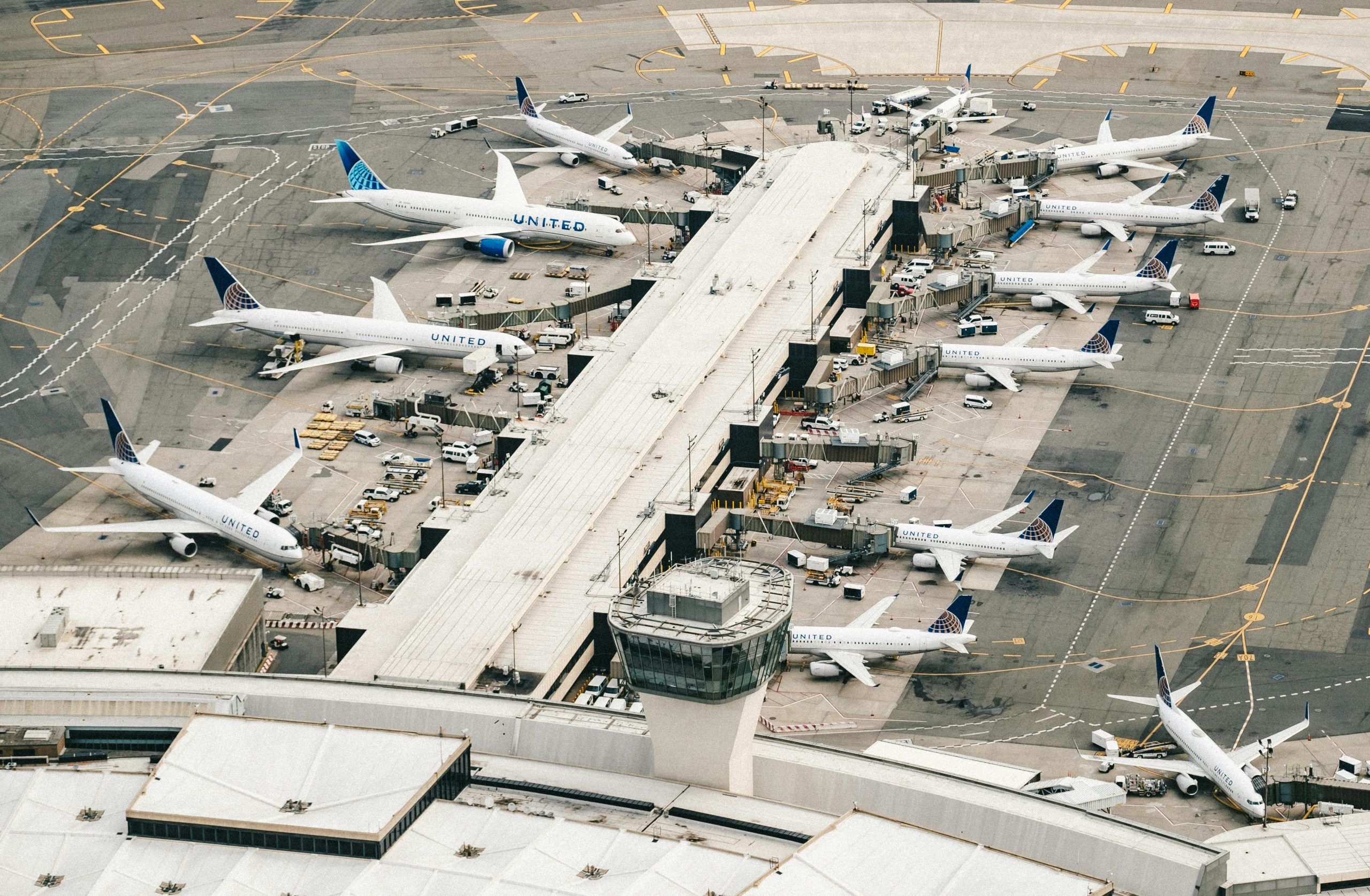
The nationwide grounding of November 13, 2026, was neither a cyber-attack, nor a terrorist plot, nor the first act of a science-fiction film. It was something far more prosaic, and in some ways even more damning: a legacy telecommunications system which, having been pushed beyond its breaking point by the very modernization which was intended to save it, buckled under the strain and took the largest aeronautical market in the world out of action for four hours and twenty minutes.
Below is what happened, why it happened, and what it teaches us about an air system which, every day, transports millions of persons through the air.
The Sequence of Events
AT 3:36 PM EASTERN TIME, at the communication systems of the regional Air Route Traffic Control Centers, responsible for the national airspace, began to fail. Radars and radio communications began to break down. The data exchanges and switches, which Transportation Secretary Sean Duffy called “antiquated,” were overloaded and began to give inconsistent readings.
At three fifty-three the Federal Aviation Administration had issued a nationwide ground stop: all aircraft of the contiguous United States were forbidden to take off; those already in the air were allowed to continue their course and land at their destination, more than three thousand of which landed safely during the interruption. International flights landing in the United States after crossing the border were reviewed on a case-by-case basis.
The order was lifted at about eight-fifteen, after a period of four hours and twenty minutes. This was the first such grounding of flights nationwide since January, 2023, when contractors deleted key files from the system of aviation notices and reports and only the second since the September 11 attacks.
The Root Cause: Modernization as Self-Sabotage
The immediate cause was not a failure of a single piece of equipment, but a collision of different generations of technology. As the Secretary of Homeland Security Markwayne Mullin put it, new equipment, new technology, was “overwhelming the older system.” The FAA had been in the process of introducing digital technology, and was in the midst of replacing copper wiring with fiber-optic cabling.
Duffy was more specific: the old switches and routers of the en route communications, whose frame formed the backbone of the whole telecommunications net, were loaded with information and went down. The new equipment had not failed; the old equipment had been overloaded because the new equipment was using it for more than it was intended.
This distinction matters: the narrative of the administration was one of victimization: the Congress had been depriving it of funds for modernization for years, the system was held together with parts bought on the auction block and 3D-printed replacements, and this was the inevitable result. There was a lot of evidence for this: the Government Accountability Office reported in 2024 that 51 out of 138 air traffic control systems had been ruled unsustainable, and 54 had been designated as “potentially unsustainable” — together more than three-quarters of the systems reviewed. In September, FAA Administrator Bryan Bedford told Reuters that the agency was running “technological silos,” relying in some cases on decades-old computers that could not communicate with each other.
But a less flattering interpretation can also be made. The very modernization, the introduction of new systems on an architecture not designed for them, is the cause of this instability. The machines did not fail by themselves; they failed because they were asked to pass data streams to which they could not accommodate themselves. The machine, not only old, was overloaded by the efforts of modernization.
The Numbers
In terms of operations, the impact was immense: By the evening of November 13th, more than five thousand flights had been cancelled, and more than ten thousand had been delayed, according to FlightAware figures cited by Michigan Public. Cirium, the aviation research company, said that eight hundred and twenty-seven aircraft had been diverted, of which 670 were sent back to their original airports and 157 re-routed elsewhere. More than one and a half million passengers were due to fly out on roughly 11,000 flights after four o’clock in the afternoon, shortly after the grounding went into effect.
The cascade continued the next day. On Saturday, when the staffing, crew and planes were still being moved, there were two thousand cancellations, and the American, United and Delta companies reduced their Saturday schedules… Officials projected that normal operations would be restored in time for the Thanksgiving travel rush, but Duffy did not rule out the possibility of further disruptions: “We didn’t think we would have this kind of outage,” he said. “We did. We were able to review what went wrong, and then reboot the system and go. But you will have more of these.”
The disturbances went further than the pleasure seekers. Auburn University’s football team was transported by bus to Mississippi State, Baylor, Washington, Kansas State, Minnesota, and Ole Miss altered their plans… It is a tribute to the centrality of aviation in American life that a failure of the communications system in a regional control center can change the time of the first kick-off at a Saturday game. The FAA urged NCAA teams to contact the agency directly so that it could give priority to flights for Saturday games.
The Funding Question
This outage was the occasion for the enlargement of the demands already presented to Congress on the same day. First, the sum of $30.1 billion for airport and air traffic control upgrades. But on Friday evening this figure was increased to fifty billion.
The breakdown was spelled out in a letter from Transportation Secretary Sean Duffy and OMB Director Russell Vought to the members of Congress. The breakdown, as noted in the letter, included $10.1 billion for air traffic control modernization, among it $7.2 billion for the “Common Automation Platform” and “controller workstations” and $2 billion for cloud computing, along with $2 billion for replacing and improving control towers and $18 billion for airport-related projects. The letter stated that such an investment is necessary to complete the modernization of our airspace and to provide a resilient communications network for air traffic controllers.
All four major airlines—American, Delta, United, and Southwest—have expressed support for the request. The Senate Commerce Committee, in a statement, cited a $1.9 billion appropriation that was already earmarked for replacing obsolete air-traffic-control equipment and suggested that this incident highlighted the need to prioritise these over other projects. Whether Congress will act with the same urgency the administration is demanding is debatable.
The question remains, however, as to whether a budget will be enough. The GAO reported in September that the FAA lacked a clear cost estimate for its modernization program and had no master schedule to coordinate its work: By May, it had 11,389 separate schedules that were not synchronized, thus increasing the risk of duplicated effort, delays, and cost overruns. Even Bedford himself urged that merely replacing copper wires with fiber-optic cable would not be enough to prevent future outages without a thoroughly modern telecommunications system.
What Prevention Actually Requires
It is nothing secret about the precautions, but they are expensive and slow, and they require a degree of organization and management that has been strikingly absent from the current modernization efforts of the FAA.
First, redundancy must be built into the architecture, not bolted on top. The system failed nationwide because of one type of equipment—the legacy switches at the en-route centers—which could not cope with the load. A properly designed system isolates failures, doesn’t let the congestion of a single facility or layer of the network propagate to the entire country.
Second, the process of modernization must be staged and tested. The new technology did not cause the blackout because it was not working; it caused the black out because it overwhelmed the other equipment which was not prepared for it. Before deploying a new system throughout the grid, the FAA needs to test it carefully and then slowly introduce it into service. The sandbox approach which in the private sector regulates the introduction of a large number of similar systems—test in isolation, introduce in a small number of users, test, and then gradually introduce a larger scale—has no counterpart at the FAA at present.
Third, the $ 50 billion request is a start, but it is also a political document. For years, the FAA has been running on stop-gaps, with components bought at auction and institutional improvisation; the 11,389 uncoordinated projects reported by the GAO is not a failure of funding, but a management failure. Congress can authorize the appropriations, but the FAA must demonstrate that it can make efficient use of them.
Fourth, the human element must be kept inviolable. During the outage, despite the breakdown of the communications system, controllers safely landed more than 3,000 planes, the system failed; the people did not. In an air traffic control system, where automation and AI-enhanced tools are layered in—and that they will be, whatever the outcome of this incident—the manual override must be strong, practiced, and unquestionable.
The Uncomfortable Conclusion
The grounding of November 13 was no catastrophe. No one died, no aircraft was lost. The system failed in a manner which made it safeguard the public safety above all else, and that was exactly what was intended, should communications fail to an acceptable degree.
It was a warning. The FAA Administrator himself has admitted that the system is a series of disparate systems on decades-old armature. The GAO has confirmed the unreliability of the majority of the agency’s systems. The Secretary of Transportation has said more outages will occur. The only question is whether the political system will view this as a real emergency or as negotiating capital in a fight for money.
The sky is not falling. But the equipment is old, the cables are copper, the modernization is being built on a foundation that cannot bear its own weight. Until this is changed, the next ground stop will not be a question of if, but when.
JEFF MATHEWS
FOR MORE