

KENNEDY SPACE CENTER, Fla. – History doesn’t just knock. Sometimes, it arrives with a thunderous roar that vibrates through your chest and a blinding light that turns the Florida dusk into daylight.
At 6:35 p.m. ET on Wednesday, the Artemis II mission officially became humanity’s return ticket to the Moon. For the first time in over 54 years, a spacecraft designed to carry humans to deep space left the launchpad. As the Space Launch System (SLS) rocket — the most powerful rocket NASA has ever built — climbed into the clouds, Commander Reid Wiseman’s voice crackled over the comms with a quiet observation: “Great view. We have a great moonrise.”
But as of this writing, the four astronauts aboard the Orion capsule aren’t quite there yet. They are tucked inside a capsule the size of a minibus, looping around our own planet at thousands of miles per hour, waiting for the signal that will slingshot them into history .
The Loiter in the Sky
If you are looking at a trajectory map right now, it might look like the crew is taking the scenic route. After separating from the rocket’s upper stage, the crew entered an initial elliptical orbit around Earth.
This 24-hour waiting game is not a delay; it is the most critical safety inspection of the mission.
According to NASA flight directors, the crew is currently running through a battery of tests on the Orion capsule’s life support, navigation, and propulsion systems. They are venturing as high as 46,000 miles above the planet’s surface to test the radiation shielding and the responsiveness of the thrusters .
“We’re looking to make sure that the life-support systems work, that the vehicle’s healthy,” Norm Knight, director of NASA’s Flight Operations Directorate, explained during a post-launch briefing. “Because once we commit to TLI, they have to function.”
TLI — Trans-Lunar Injection — is the magic word here. It is the 20-minute engine burn scheduled for tonight (around 8:12 p.m. EDT) that will rip the capsule out of Earth’s gravity well and hurl it toward the Moon . If that burn doesn’t happen, the mission becomes a very short orbital trip. If it does, the crew is committed to a 10-day, 500,000-mile round trip.
Gremlins in the Machine (and the Toilet)
Of course, no human endeavor into the unknown goes perfectly smoothly. As the crew settled into orbit, engineers on the ground noticed a small blinking light on a mundane but vital piece of equipment: the toilet.
Officially known as the “Universal Waste Management System,” the onboard loo briefly caused a scare when a fault light blinked on. It was a reminder that even in the age of super-heavy lift rockets and deep-space capsules, spaceflight remains a gritty, practical business.
“We do recommend letting the system get to operating speed before donating fluid,” Mission Control joked with the astronauts earlier in the flight .
Thankfully, NASA engineers were able to troubleshoot the issue remotely. A valve connected to the water tanks, which had closed when it should have been open, was reset . By early Thursday morning, the “space loo” was declared operational. When you are spending 10 days in a can, that is a very big “go.”
The Crew of ‘Integrity’
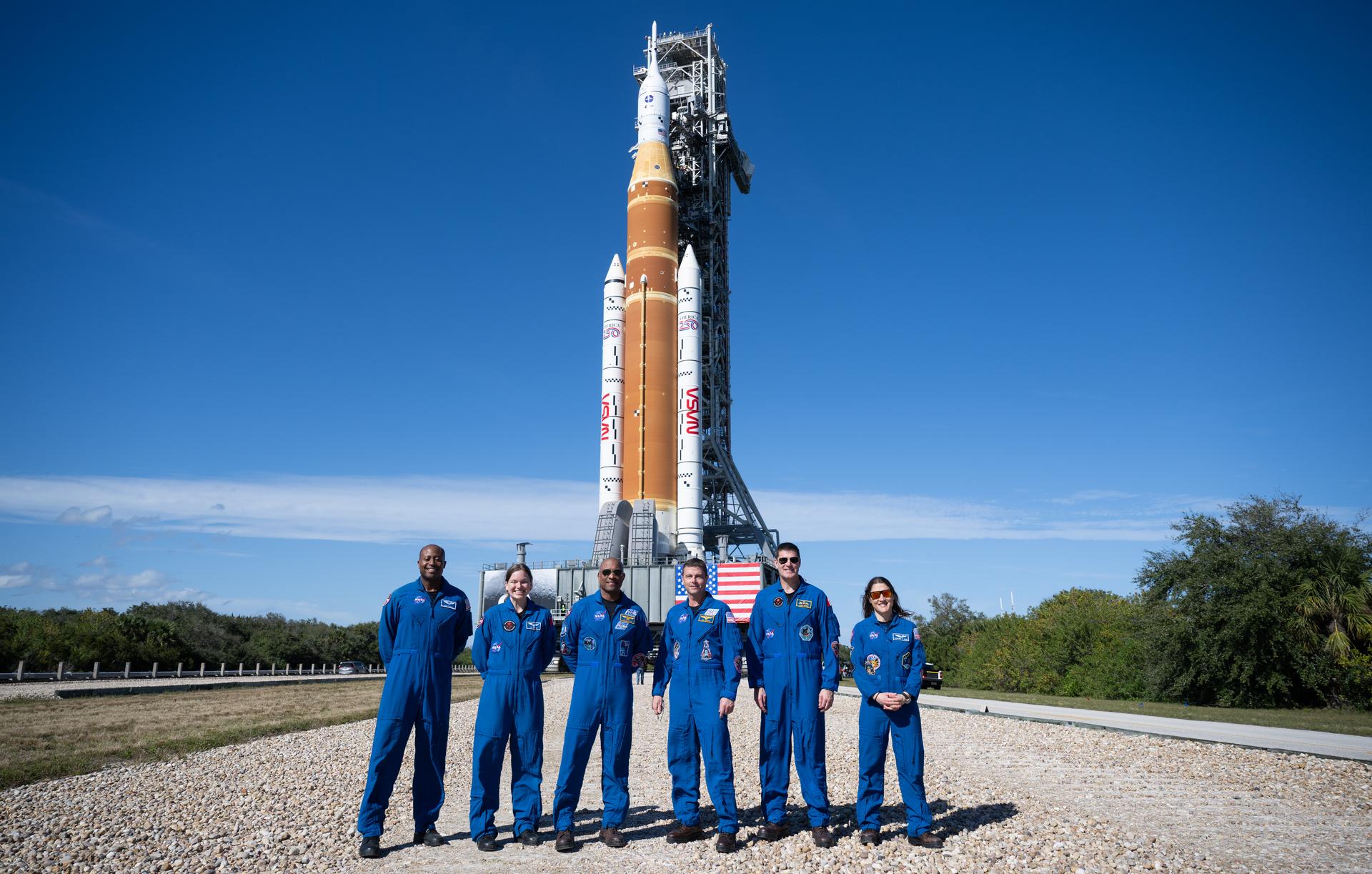
The four astronauts aboard the spacecraft, which the crew has affectionately named Integrity, are carrying the weight of the world’s expectations.
Commander Reid Wiseman leads the charge, but he is joined by Pilot Victor Glover, Mission Specialists Christina Koch, and Jeremy Hansen of the Canadian Space Agency . This is the most diverse crew to ever head toward the Moon. Glover is the first person of color to make this journey; Koch is the first woman; and Hansen is the first non-American .
Shortly before the hatch closed, Koch reflected on the legacy of Apollo versus the promise of Artemis.
“While Artemis builds on Apollo and pays homage to it, there is no way we could be that same mission or ever hope to even be… we are representing all of humanity this time,” Koch said .
Glover added a message for those watching from the ground: “We are going for our families. We are going for our teammates.”
What Happens Tonight?
As we speak, the Mission Control Center in Houston is crunching data. They are analyzing the thermal performance of the heat shield, the efficiency of the solar panels, and the cabin’s air quality.
If all of those metrics fall into the green zone, the go order will be given. At 01:00 BST (8:12 p.m. EDT) on Friday, the Orion capsule’s main engine will light up. The crew will be pinned back in their seats as they accelerate to 25,000 mph, escaping low-Earth orbit .
They will spend the next three days coasting toward the Moon. On April 6, they will whip around the far side — a region of space no human eyes have seen up close since 1972 — before beginning the long fall back to Earth .
For now, the crew of Integrity is looking down at the blue marble, waiting for permission to leave the driveway.
As NASA Administrator Jared Isaacman put it just after the successful launch: “Today’s launch marks a defining moment for our nation and for all who believe in exploration.”
Stay with ZTEC100.com for live updates as Artemis II approaches the Translunar Injection burn and the journey to the Moon begins.
Reporter’s Note: We felt the launch from here in Florida. It was a deep, bone-shaking rumble that didn’t stop for nearly two minutes. To see a new generation of humans silhouetted against the glare of an SLS rocket is to believe that we are, finally, going back.
B.B HELTON