

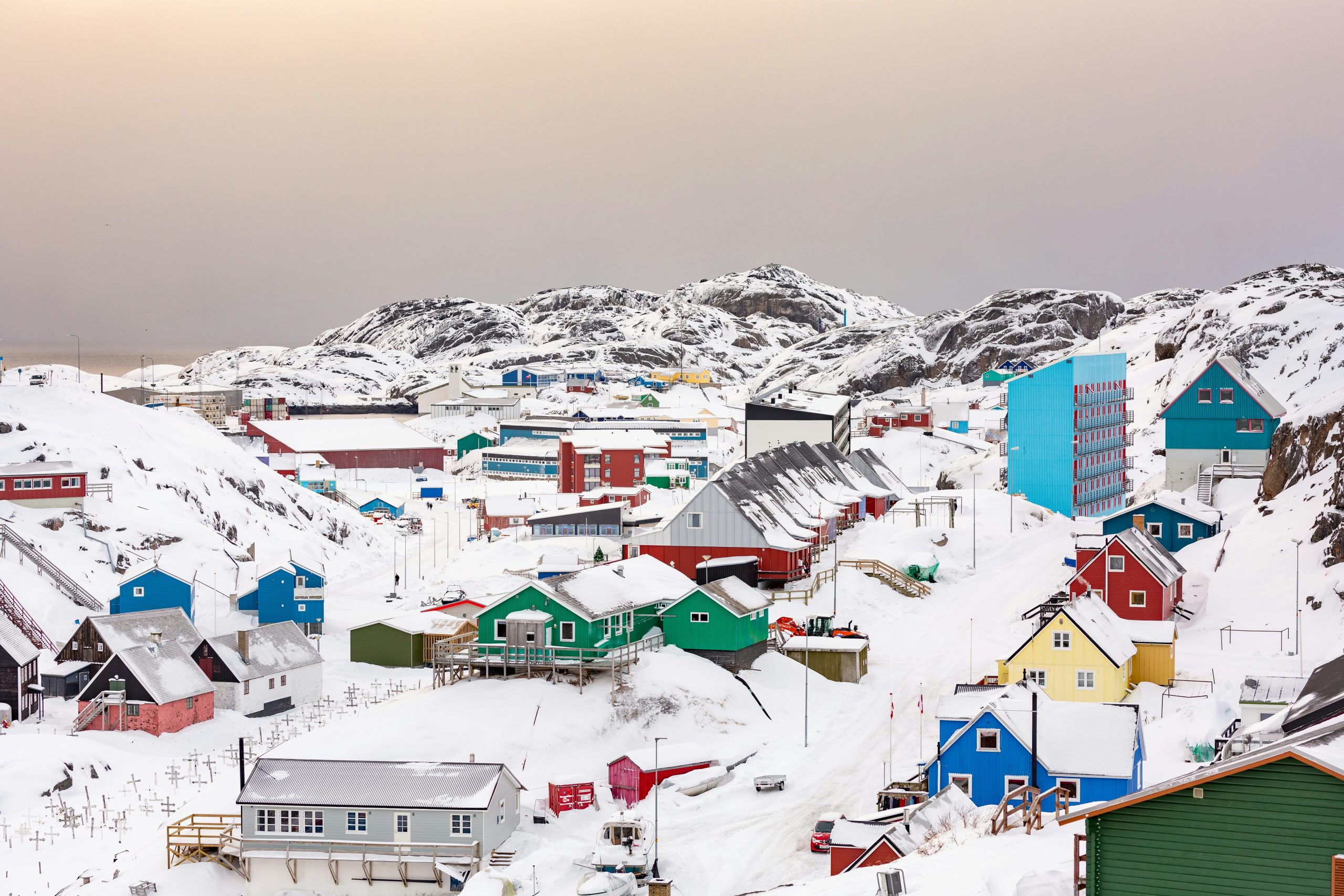
If you were a global superpower looking to spruce up your empire, what would you add to your collection? A tropical island? A strategic mountain pass? How about… the world’s largest, coldest, and most sparsely populated ice cube?
That’s right. The object of President Donald Trump’s most persistent geopolitical affection isn’t a sunny resort or a tech hub. It’s Greenland. A place where 80% of the local residents are… penguins? (Note to editor: They are not. There are no penguins in Greenland. This is the level of geographic detail we’re working with here.).
The saga reads less like high-stakes statecraft and more like a rejected plot for a sitcom: The One Where The President Tries To Buy A Country. But in January 2026, after a dramatic military operation in Venezuela, the joke stopped being funny. The White House started openly discussing “a range of options,” pointedly refusing to take military force off the table. Suddenly, the question isn’t “why does he want it?” but “how could this potentially end?”
The “Why”: It’s the Ultimate Fixer-Upper (With Missiles)
So, what’s the appeal? Imagine the ultimate real estate listing, penned by a broker who only thinks in superlatives and menace.
- Location, Location, Annihilation: The listing would trumpet “breathtaking Arctic views and unparalleled proximity to Russia!” Greenland is a colossal geological dashboard for monitoring the Northern Hemisphere. The shortest route for a Russian missile to the U.S. goes right over it, and the island straddles key naval chokepoints. The U.S. already has a front-row seat at Pituffik Space Base, but the current president seems to think a lease isn’t as good as owning the whole theater.
- Future-Proofing with Melting Ice: The sales pitch continues: “Enjoy the exciting potential of climate change!” As the ice recedes, two things happen: vast deposits of rare earth minerals, oil, and gas become more accessible, and new shipping routes open up. It’s a two-for-one deal: resource wealth and control of tomorrow’s trade lanes. Trump has publicly downplayed the minerals, insisting it’s “for national security,” but his aides have been less subtle.
- The “Golden Dome” Dream: The pièce de résistance is a visionary home improvement project. The administration is obsessed with building a “Golden Dome” missile defense shield over North America. Analysts say placing interceptors in Greenland would be like moving your chess pieces right up to your opponent’s king. “Part of that is going to have to depend on Greenland,” one expert noted.
In essence, Trump sees Greenland not as a society of 56,000 people, but as the ultimate strategic accessory—a combination early-warning system, mineral bank, and missile platform that he believes the U.S. must own, not just rent.
The “How”: From Real Estate Deal to Geopolitical Standoff
The president’s approach has evolved from a curious inquiry to a full-blown crisis, much to the horror of everyone actually involved.
- The Opening Bid (2019): It started, famously, as a real estate proposition. “Essentially a real estate deal,” he called it. Denmark and Greenland gave a unified, polite-but-firm response: “Not for sale”.
- The Hardball Play (2025-2026): Returning to office, the tone shifted from buyer to would-be acquirer. After the Venezuela raid demonstrated a willingness to use force, the rhetoric around Greenland became menacing. Trump spoke of taking it “the easy way or the hard way” and stated, “one way or the other, we’re going to have Greenland”. He appointed a special envoy, Jeff Landry, who openly spoke of making it part of the U.S..
- The Diplomatic Car Crash: This is where the situation curdles from awkward to alarming. When Greenland’s Prime Minister, Jens Frederik Nielsen, asserted his people’s will, Trump dismissed him: “I don’t know who he is”. The Danish PM, Mette Frederiksen, warned that a U.S. attack on Greenland would mean “the end of NATO”. A unified front of European leaders declared, “Greenland belongs to its people”.
The people of Greenland, caught in the middle, have been unequivocal. Polls show over 85% oppose becoming part of the U.S.. As one lawmaker put it, “You can’t buy a country, but you can also not buy a population”. In a powerful statement, Prime Minister Nielsen said if forced to choose, “we choose Denmark. We choose NATO”.
How This Could End: Five (Mostly Bad) Scenarios
So, where does a standoff between an immovable superpower and a very defiant, icy object go? Let’s game out the endings, from least to most catastrophic.
The most likely outcome, sadly, isn’t a clean win. It’s Scenario 1: The “Fudge.” European diplomats are already practicing “transatlantic judo,” trying to redirect Trump’s aggression into a negotiated deal for more bases and resources. They might succeed in giving him enough to declare victory, saving NATO but betraying the principle of self-determination in the process.
The tragedy is that it never had to be this way. As experts stress, the U.S. already has the security cooperation it needs through existing treaties. The path to influence was through respectful partnership with Greenlanders, who were open to investment and closer ties. But by framing them as a piece of real estate to be acquired, the administration has achieved the opposite of its goal: uniting Greenland with Denmark, alienating all of Europe, and making the U.S. look less like a leader and more like a neighborhood bully trying to steal a snowglobe.
In the end, the story of Trump and Greenland is a farce with the highest possible stakes. It’s a lesson in how not to conduct foreign policy, where the pursuit of absolute control risks destroying the very alliances that provide security. The world is left hoping the finale is a damp, diplomatic fudge, and not the explosive, alliance-ending meltdown this bizarre plotline threatens to deliver.
by Sam Jones