

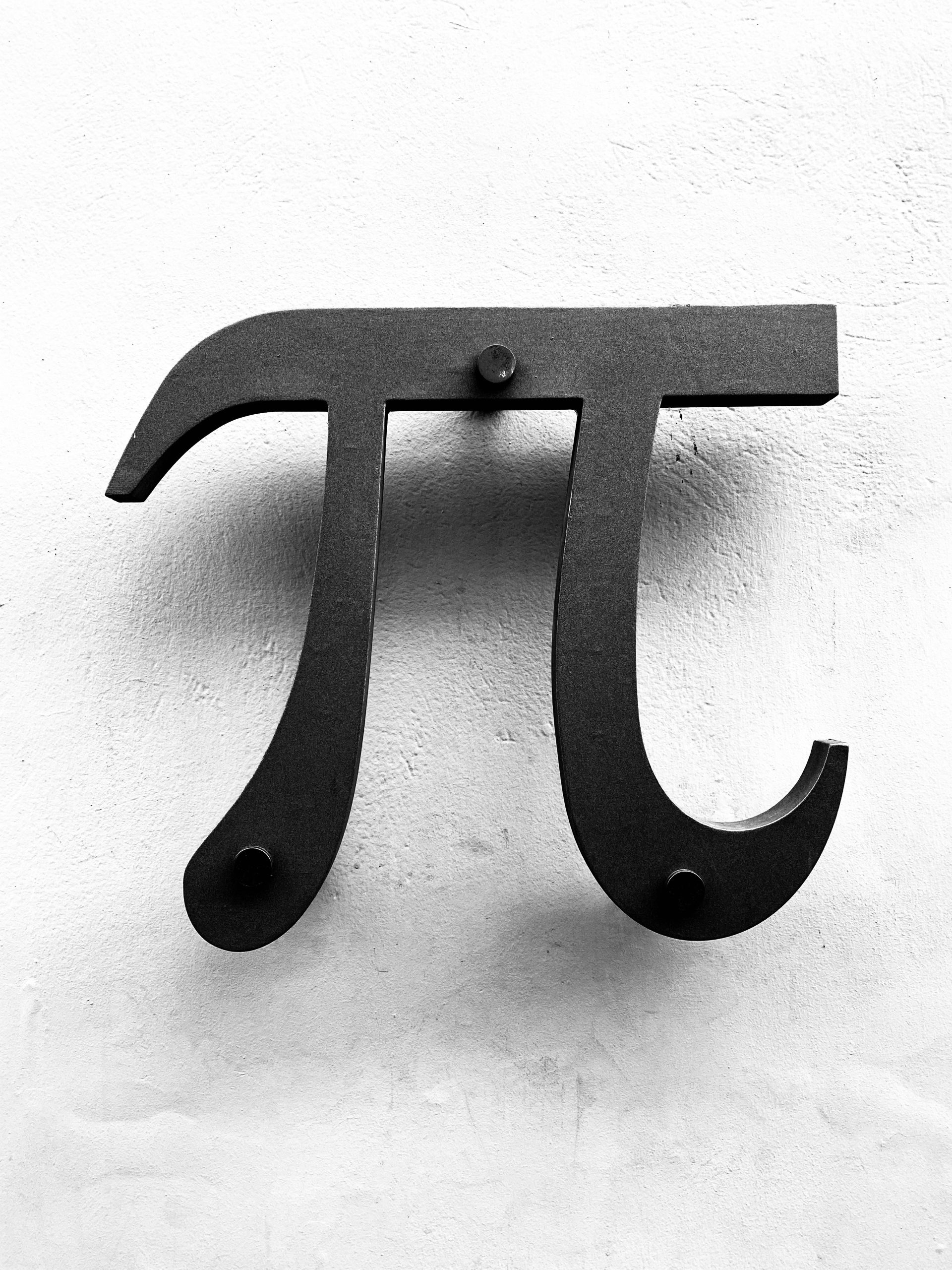
Here’s a question that has haunted mathematicians for centuries: why does the universe insist on making beautiful things so complicated? You draw a circle—just a simple, innocent loop—and suddenly you’re staring at a number that never ends, never repeats, and has driven people to memorize 70,000 digits for reasons nobody can fully explain.
Today, March 14, 2026, is Pi Day. And if you think that’s just an excuse for math teachers to bring pastries to class, you’re missing the cosmic punchline. Because today is also Albert Einstein’s birthday. The universe, it seems, has a sense of humor.
The Day Larry Shaw Changed Everything (With Pie)
The story of Pi Day begins not in ancient Greece or Renaissance Italy, but in 1988 at San Francisco’s Exploratorium, where a physicist named Larry Shaw decided that a mathematical constant deserved a proper party . There were parades. There was pie. There were probably a few people arguing about infinite series while wearing propeller hats. What started as a nerd gathering slowly escaped the lab and became a global phenomenon .
The date choice was obvious. March 14—3/14 in the American way of writing things—gives you the first three digits of π: 3.14 . It’s the kind of accidental perfection that makes you wonder what else we’re missing.
By 2009, the U.S. House of Representatives, with the kind of bipartisan agreement usually reserved for naming post offices, officially declared March 14 National Pi Day . And in 2019, UNESCO went ahead and made it the International Day of Mathematics, because apparently the rest of the world wanted in on the action .
The Number That Broke Geometry
Here’s what makes pi genuinely magical. Take any circle—a coin, a wheel, a planet, the ring left by your coffee mug on a important document—and measure its circumference. Divide that by its diameter. The answer, always and everywhere, is the same constant: approximately 3.14159 and then some .
That constancy is what gets mathematicians emotional. Geometry, in one of its rare generous moods, gives you a universal law. And then it immediately ruins your day.
Because pi is not a neat fraction. It’s not 22/7, except in the same way that a cardboard cut-out of your favorite actor is not actually that actor . Pi is irrational, meaning its decimal representation goes on forever without repeating in any predictable pattern . Mathematicians call this irrational. In ordinary life, it also describes anyone who has ever tried to memorize 20,000 digits of pi for fun.
In the eighteenth century, mathematicians proved pi is irrational. Then, in the nineteenth century, they proved something even stronger: pi is transcendental, meaning it cannot be the solution to any polynomial equation with whole-number coefficients . This had dramatic consequences. For centuries, people had tried to solve the ancient problem of “squaring the circle” using only a compass and straightedge. Once pi was shown to be transcendental, that dream collapsed. The problem wasn’t difficult. It was impossible. A two-thousand-year-old puzzle died because a number refused to cooperate .
Meanwhile, in Ulm, Germany…
On March 14, 1879, a baby was born who would grow up to rearrange our understanding of the entire universe. Albert Einstein entered the world in Ulm, Germany, showing early passion for music and science rather than any obvious signs of impending genius .
By 1905, he’d had what scientists call his “Annus Mirabilis” or Miracle Year, publishing four groundbreaking papers: his special theory of relativity, the photoelectric effect, an analysis of Brownian motion, and his famous E=mc² formula . In 1921, he won the Nobel Prize. By the 1930s, he’d fled rising fascism in Germany for Princeton, New Jersey, where he continued working until his death in 1955 .
Here’s the part that feels like the universe showing off: Einstein’s work revealed that space itself curves. That the universe is full of circles—orbits, rotations, waves bending back on themselves. Pi appears whenever the world curves, spins, oscillates, radiates, expands, or does anything even vaguely circular . Pi is what reality looks like when motion starts curving. And it’s also the birthday present for the man who figured that out.
How Pi Day 2026 Actually Went Down
This year’s celebrations ranged from the sublime to the deeply silly, often within the same building.
Houston got messy. At the Children’s Museum Houston, hundreds gathered for the 21st Annual Pi Day Pi(e) Fight, sponsored by ConocoPhillips (because oil money and math apparently mix well) . At exactly 1:59 p.m.—a nod to the digits following 3.14—teams called the “Blueberry Blasts” and “Pumpkin Power” faced off in a shaving cream showdown that left participants looking like they’d lost a battle with a bakery .
The day included Mentos geysers, elephant toothpaste demonstrations, liquid nitrogen shows, and something called “Pie in Your Face” where you could take a chance and see who gets a whipped cream surprise . There were pi bracelets where each colored bead represented a different digit, a pie walk (think musical chairs, but with dessert), and hula hoop performances with “gravity-defying tricks” . If Archimedes had seen this, he would have either wept with joy or demanded to know who funded it.
The internet did what the internet does. On X, #PiDay trended globally as users blended mathematical precision with the creativity of people who have too much time on their hands . One meme from media account PhilSTAR L!fe asked users to rate their childhood math experiences on a pi-inspired scale, with options ranging from “1 – I love math” to “5 – I still fear long division” and “14 – I survived calculus” .
Crypto enthusiasts joined in because of course they did. A user posted an image of a cat wearing a chef’s hat while holding a pie marked with the π symbol, captioned “Happy Pi Day from the only baker that matters. $MICHI,” linking the holiday to a Solana-based meme coin . Somewhere, Satoshi Nakamoto is either laughing or crying.
Anime fans got involved too. One user shared a photo of a pepperoni pizza placed lovingly next to Blue Archive anime plush dolls, explaining that a favorite character’s birthday falls on 3/14 . At this point, Pi Day has transcended mathematics and become a universal excuse for themed content.
Google paid its respects. The search giant dropped an interactive Doodle honoring Archimedes’s ancient method for estimating pi using polygons . The Doodle allowed users to engage with the approach of “sandwiching a circle between two 96-sided polygons” to determine its precise bounds . Because nothing says “fun morning browse” like mentally revisiting third-century BC geometry.
Arizona ate well. Restaurants across the state offered deals that turned math into commerce. 7-Eleven sold whole pizzas for $3.14 to rewards members. Burger King offered free pie with any purchase over $3.14. DoorDash ran Pizza Hut BOGOs and Blaze Pizza promotions . Crumbl teased a surprise pie flavor that varied by location, forcing customers to check their app like mathematicians consulting ancient texts .
The Cambridge Connection (and Why MIT Cares)
Here’s a tradition that deserves its own paragraph. The Massachusetts Institute of Technology, which has never met a math joke it didn’t like, often releases its undergraduate admission decisions on Pi Day at exactly 6:28 p.m. Eastern Time . Why 6:28? Because that’s “Tau Time”—τ (tau) equals 2π, approximately 6.28. It’s the kind of nerdy precision that makes you either want to apply to MIT or run screaming toward a liberal arts college.
This year, thousands of anxious high school seniors stared at their phones at 6:28, hoping for acceptance letters while contemplating the infinite digits of the number that shares their day of judgment. It’s beautiful and cruel, like mathematics itself.
The Record That Still Stands
For those who think memorizing pi digits is a party trick reserved for savants and people with too much time, consider Rajveer Meena. In 2015, this Indian gentleman set a Guinness World Record by reciting 70,000 digits of pi from memory at VIT University in Vellore .
Seventy thousand digits. That’s approximately the length of a short novel, except instead of plot and character development, it’s just numbers. Meena reportedly took nearly 10 hours to complete the recitation . That’s longer than most people’s workdays, longer than a transatlantic flight, longer than it takes to watch the extended edition of all three Lord of the Rings movies.
And somewhere, in the middle of digit 38,472, I like to imagine Meena had a brief moment of existential crisis before pressing on. That’s dedication. That’s madness. That’s Pi Day.
Why This All Matters (Beyond the Pie)
Here’s the thing that makes Pi Day genuinely worth celebrating, even if you failed high school geometry. Pi is not merely a number. It is evidence that the universe is intelligible, but only up to a point. Beyond that point lies infinity, and all we can do is keep calculating, keep approximating, keep wondering, and occasionally eat pie in honor of our own intellectual limitations .
It appears in trigonometry because sine and cosine describe circular motion. It appears in waves because waves repeat in cycles. It turns up in statistics, particularly in the normal distribution that governs many natural processes. It emerges in electromagnetism, quantum mechanics, fluid dynamics, and even the equations describing the curvature of space .
Pi is what reality looks like when motion starts curving. And on March 14, we pause to honor that curvature, the man who helped us understand it, and the delicious baked goods that make it all bearable.
The Children’s Museum Houston put it perfectly on their event page: “March 14 isn’t just any ordinary day—it’s π Pi Day and also marks the birthday of the legendary Albert Einstein!” . Nearly two decades after they sparked the original international sensation, they’re still shutting down streets for shaving cream fights in his honor.
Einstein himself once said, “The most incomprehensible thing about the universe is that it is comprehensible.” He was talking about the fact that we can understand things like pi at all. But he might as well have been talking about the cosmic coincidence that placed his birthday on the same day we celebrate a number that never ends.
So tonight, after you’ve finished your pizza (bought for $3.14 at 7-Eleven) and your pie (free with any purchase at Burger King), take a moment to thank the universe for its sense of humor. For Larry Shaw, who started this whole thing with a fruit cake pie in 1988. For Archimedes, who trapped circles between polygons and refused to let go. For the 147th digit of pi, which nobody will ever need but which exists anyway.
And for Albert Einstein, born 147 years ago today, who showed us that the universe is full of curves—and that those curves, like pi itself, are worth celebrating.
Happy Pi Day. Now go eat something round. You’ve earned it…
BY J. THOMAS