

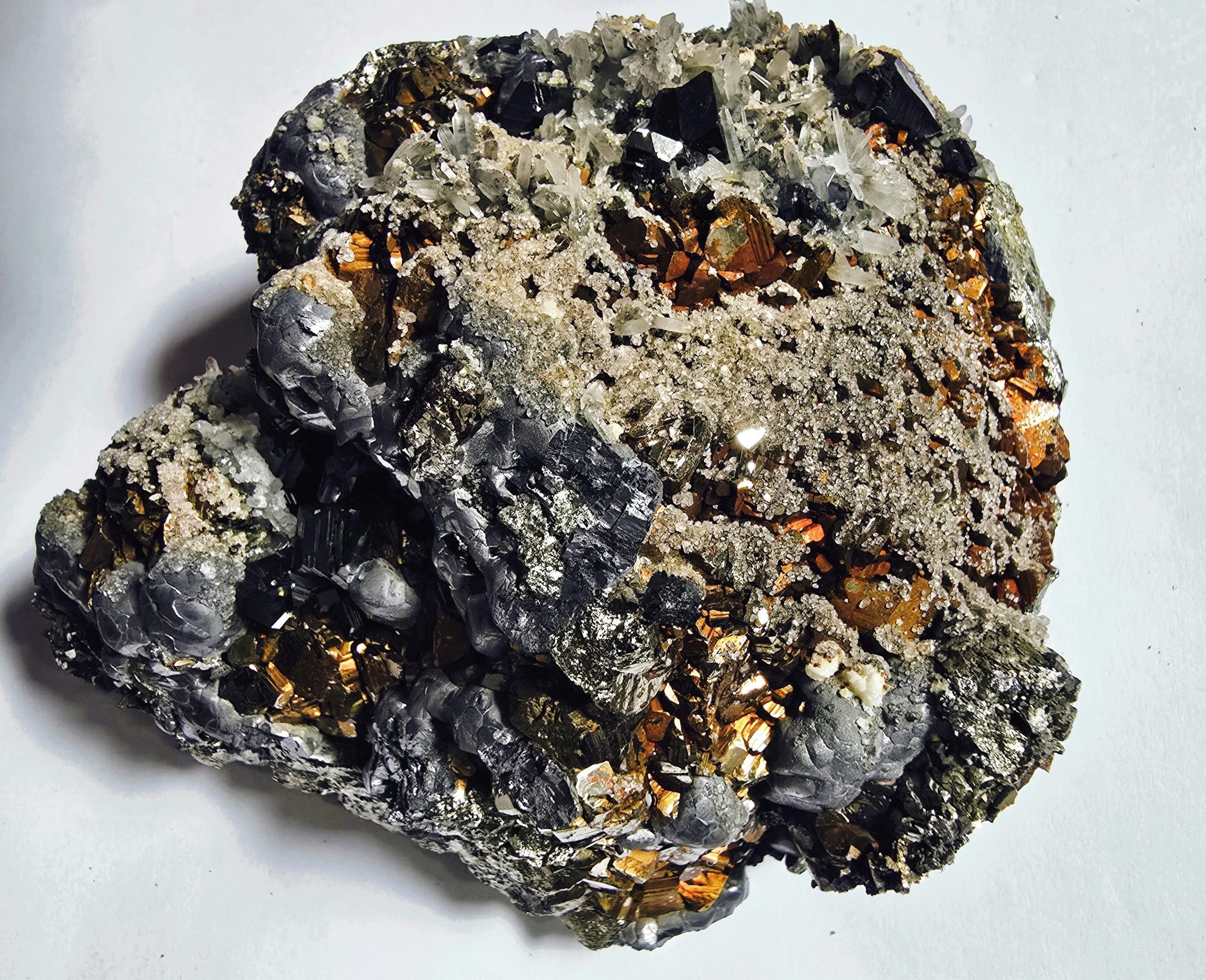
In the modern world, nations aren’t just vying for military dominance or cultural influence—they’re fighting over something far more foundational: the very building blocks of our high-tech civilization. At the heart of this new struggle are Rare Earth Elements (REEs), the 17 obscure metals critical to everything from smartphones and electric vehicles to fighter jets and wind turbines. As the world races to secure its technological future, two countries with immense but problematic mineral potential, Venezuela and Ukraine, have become central pieces in a high-stakes global game involving the United States, China, and Russia.
Venezuela: The $200 Billion Prize in the Amazon
Long known for possessing the world’s largest proven oil reserves, Venezuela’s future relevance is increasingly tied to something else: a vast, largely untapped treasure of rare earth elements estimated to be worth over $200 billion. These deposits are primarily concentrated in the Orinoco Mining Arc, a biodiverse region the size of Portugal that was designated for mineral exploitation in 2016.
However, this wealth has become a curse as much as a blessing. The Mining Arc has devolved into a lawless zone rife with illegal mining, environmental devastation, and control by criminal gangs and guerrilla groups. The Venezuelan state has failed to capitalize on it responsibly, with most of the extracted gold and minerals—including rare earths like coltan—being smuggled out, often to China. This chaos has rendered the area’s critical mineral potential, while massive on paper, effectively “locked in the ground.”
Recent dramatic U.S. intervention and the capture of President Nicolás Maduro have thrust Venezuela’s resources back into the global spotlight. Experts argue this move is less about drugs or democracy and more about a resource-driven foreign policy aimed at securing oil and, crucially, building a Western Hemisphere supply chain for critical minerals to bypass China. As one analyst noted, the intervention provides a “window into the centrality of resource politics” to the current U.S. administration’s worldview. The goal is clear: to prevent these resources from permanently falling under Chinese influence and to use them to fuel American technological dominance.
Ukraine: The Strategic Asset Under Fire
Half a world away, Ukraine’s mineral wealth has become a different kind of geopolitical weapon. The country is estimated to hold about 5% of the world’s critical minerals, including Europe’s largest lithium reserves and significant deposits of titanium, graphite, and rare earth elements. Prior to Russia’s full-scale invasion, these resources were seen as a key to Ukraine’s future economic growth and Europe’s green transition.
The war has catastrophically altered this calculus. Russia now controls territory containing roughly 40% of Ukraine’s metal resources, deliberately seizing industrial and mining regions to strangle Ukraine’s economy and bolster its own resource base. This adds a brutal, “resource war” dimension to the conflict.
In response, a proposed U.S.-Ukraine deal aimed to leverage these untapped resources for reconstruction. The idea was to use future mineral revenues to repay aid and fund rebuilding. However, this plan hit a major, perhaps fatal, roadblock: a harsh reality check from mining experts.
While Ukraine has known rare earth deposits, they are not considered economically viable to mine. The ores are of poor quality, located in war zones, and would require over a decade and billions of dollars to develop—an utterly unappealing proposition for private investors. As one industry expert bluntly stated about sourcing rare earths from Ukraine: “It’s a fantasy“. The deal’s failure revealed it was more about political symbolism and leveraging an asset—any asset—in desperate wartime negotiations than about practical mineral sourcing.
The Bigger Picture: A World Scrambling to Escape China’s Grip
The fierce interest in Venezuela and Ukraine is a symptom of a global diagnosis: acute dependence on China. Beijing controls an estimated 85-90% of the global rare earth processing capacity, a dominance it has not hesitated to wield as a geopolitical tool through export controls. This concentration represents a critical vulnerability for Western economies and defense industries.
Both the U.S. and the European Union are desperately trying to “friend-shore” and diversify their supply chains. Ukraine’s resources, if accessible, could help Europe’s green transition. Venezuela’s, if harnessed, could provide a nearby alternative for the U.S.. However, the cases highlight the immense difficulty of this task. It’s not just about finding rocks in the ground; it’s about decades of investment, stable governance, and complex infrastructure that China spent years building.
The Bottom Line
Venezuela and Ukraine illustrate that in the 21st century, mineral wealth is both a curse and a strategic lifeline. For Venezuela, its rare earths are a dormant $200 billion prize at the center of a new cold war rivalry between the U.S. and China, now violently unlocked by regime change. For Ukraine, its minerals are a symbol of future sovereignty and a bargaining chip in a fight for national survival, even if their immediate economic value is overstated.
Ultimately, the scramble for their resources is less about the specific tons of neodymium or lithium they may hold and more about the global power struggle they represent. Controlling the materials that power the future means controlling the future itself. As one U.S. official warned, without securing these supply chains, we risk a world where “virtually everything that matters to us in life will depend on whether China will allow us to have it or not”. The battles in Caracas and Kyiv are, in many ways, the first fronts in that larger war.
BY SAM JONES