

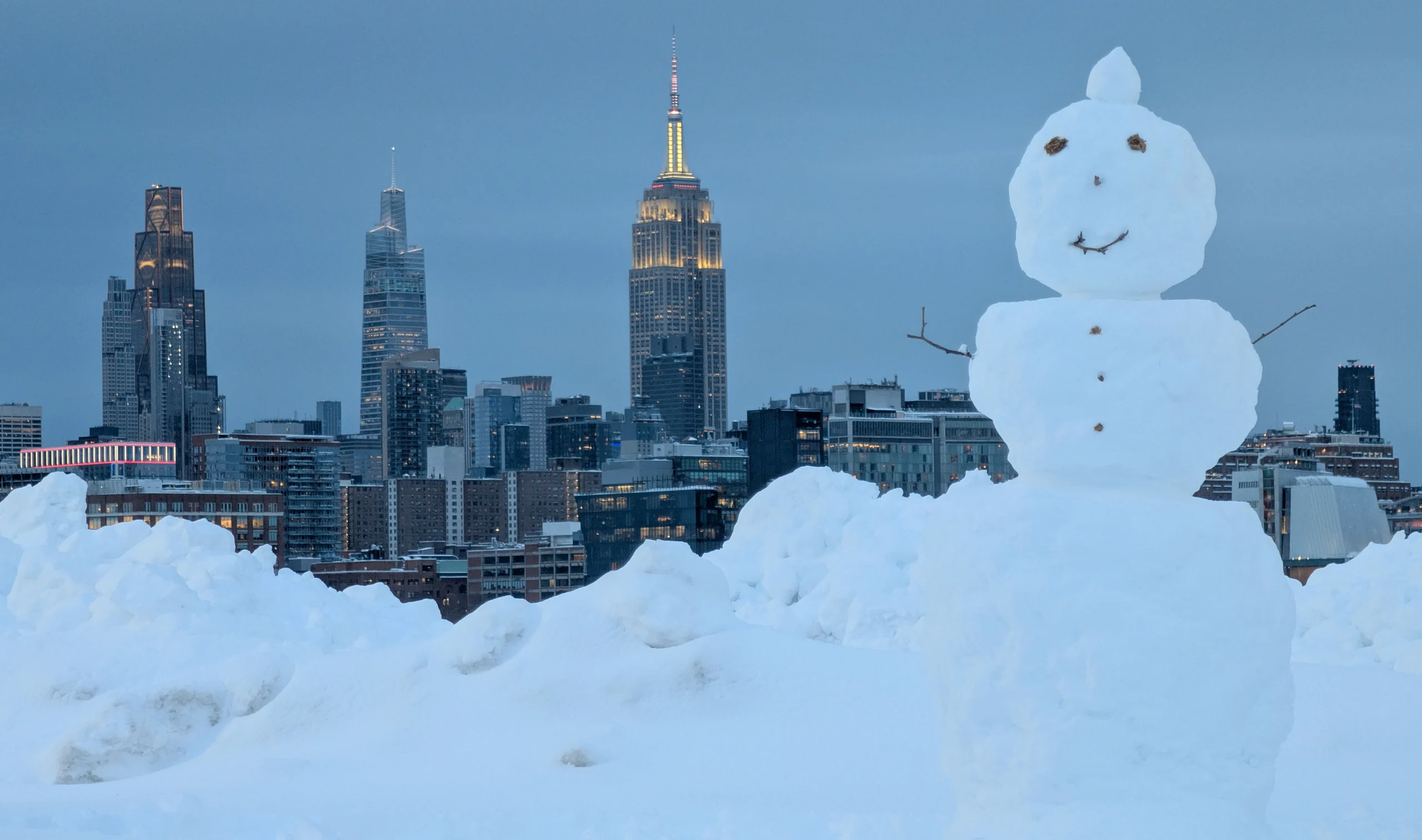
If you’ve ever lived in New York City during a snowstorm, you know the drill. You wake up, peek through the blinds, and see your car transformed into a frozen marshmallow. You sigh, put on three layers of clothing you didn’t know you owned, and spend the next two hours throwing your back out while the guy with the private plow down the street waves cheerfully from his already-clear driveway.
But something magical happened during the Blizzard of 2026. Something that made New Yorkers stop and say, “Wait, the government actually… helped?”
The Man with a Plan (and a Paycheck)
Meet Zohran Kwame Mamdani, the mayor of New York City. If you’re expecting the typical politician who stands at a podium, tells you to “stay safe,” and then disappears while you’re still scraping ice off your windshield, you haven’t met this guy.
When the Blizzard of 2026 came barreling toward the five boroughs with 18 to 24 inches of snow and wind gusts up to 60 miles per hour, Mamdani did something unprecedented . He looked at the snow, looked at the city’s budget, and said something that should have been obvious but somehow wasn’t:
“What if we just… paid people to shovel?”
And not just any people. The city ramped up its emergency snow shoveler program to hire hundreds of regular New Yorkers, paying them $30 an hour to clear crosswalks, bus stops, and fire hydrants . Not $15. Not “exposure” or “the satisfaction of helping your community.” Thirty. Dollars. An hour.
Overnight alone, 575 emergency snow shovelers were deployed. By Monday morning, more than 800 were working. And by Monday afternoon, the city had expanded supervision capacity and said it could deploy up to 1,800 shovelers per shift .
Let that sink in. The city that never sleeps was paying people to shovel while they were awake.
The Numbers That Actually Matter
Here’s what those shovelers accomplished while most of us were still trying to find matching gloves:
- More than 1,600 crosswalks cleared overnight
- 419 fire hydrants dug out (because nothing says “fun” like a fire truck arriving at a burning building only to find it’s hiding behind a snowdrift)
- Nearly 900 bus stops made accessible
And that was just the overnight shift. By the time the sun came up, sanitation workers had plowed more than 99.5% of city streets at least once and dumped over 50 million pounds of salt on roadways . That’s 25,000 tons of salt, which is either impressive or terrifying depending on how you feel about sodium intake.
The Sidewalk Mafia Strikes Back
Now, here’s where it gets interesting. Because while the city was busy hiring shovelers, Mayor Mamdani also had a message for property owners:
“You’re not off the hook.”
After the January 25 storm, the city had issued more than 4,000 violations to property owners who failed to clear their sidewalks within the required time . Four. Thousand. That’s a lot of angry homeowners.
The rules are actually pretty straightforward, if you can follow a timeline:
| If snow stops… | You have until… | Or else… |
|---|---|---|
| 7:00 AM – 4:59 PM | 4 hours later | $100 fine (first offense) |
| 5:00 PM – 8:59 PM | 14 hours later | $150 fine (second offense) |
| 9:00 PM – 6:59 AM | 11:00 AM next day | $350 fine (third offense and beyond) |
And if you think you can just push that snow into the street? Think again. That’s also illegal, because apparently the city has rules about turning roads into ski slopes .
Mamdani’s warning was delivered with the kind of gentle firmness that makes you feel like you’re being scolded by a very disappointed parent: “We do not want to issue as many citations again. So please, if you are a property owner, do your part” .
The Economics of Snow: It’s Actually Fascinating
Here’s something you probably never thought about: snow removal in New York City costs about $1.5 million per centimeter of snowfall, averaged over the last decade . Yes, you read that right. Per centimeter.
The Department of Sanitation maintains 2,300 plows and salt spreaders, plus “massive machines that can melt 50 tons of snow per hour,” plus enough salt to cover… well, a lot of pretzels . Josh Goodman, a DSNY spokesman, put it in perspective: “It’s not like shoveling your driveway. Snow removal in New York is a massive, complicated operation that we plan for year-round” .
And here’s the kicker: even when it doesn’t snow, it costs money. During the winter of 2023-2024, when basically no snow fell, the city still spent $27 million on snow preparedness . That’s the equivalent of paying 900 people $30,000 each to stand around waiting for flakes.
The Snow Day That Made Everyone Cry
But maybe the most heartwarming part of this whole story happened before a single flake fell.
Mamdani announced the city’s first full traditional snow day—with no remote learning—in a way that made every parent and child simultaneously emotional . He posted a video on social media of a FaceTime call with an eighth-grade girl named Victoria from Brooklyn.
“Oh my God, it’s the mayor,” the girl yelped, in a moment of pure, unfiltered 2026 energy.
“We’ve got a full snow day tomorrow. No online school, no remote learning. Full classic snow day,” Mamdani told her. “So my only ask to you is that you just stay safe, stay indoors during the height of the storm. Once that has passed, feel free to go out and sled” .
This was the first traditional snow day in New York City since remote learning became a thing during the 2020 pandemic. No Zooms. No “please mute yourselves.” Just snow, kids, and the beautiful chaos of sledding.
The teachers union president, Michael Mulgrew, backed the decision completely, sending a message to members explaining that the state had granted a waiver from the 180-day instructional requirement because of the travel ban and the fact that students and staff had been on break the week before and “are unlikely to have the equipment they need for a day of remote learning” .
Translation: nobody wanted to deal with 1.1 million kids trying to log in from home while their parents were shoveling. Smart.
Meanwhile, in the Free Market…
While the city was busy being efficient, private entrepreneurs were doing what private entrepreneurs do best: charging whatever the market would bear.
Johnny Yurnet, owner of “Where We Going? Moving Solutions,” told News 12 that his snow removal prices start at $100 and go up from there, especially after multiple days when snow turns into “black ice” . Hedley from H&O Hauling Company noted that “a lot of people are not fit to do the shoveling” and that it’s “a very hard job” . Translation: you’re paying for the back pain you’re avoiding.
For homeowners in places like Floral Park, professional snow removal typically runs between $209 and $297 per job, though it can vary from $76 to $627 depending on driveway size and complexity . That’s not nothing, but compared to a herniated disc? Possibly worth it.
The Bigger Lesson
Here’s what made the Blizzard of 2026 different from every other snowstorm in recent memory: the city actually treated snow removal like the public service it is, rather than an inconvenience that citizens should figure out on their own.
By hiring hundreds of shovelers at decent wages, the city accomplished multiple things at once:
- Streets got cleared faster because more hands were on deck
- People got paid who might have otherwise been struggling during the storm
- Property owners got a break (literally, from shoveling)
- Fire hydrants became visible again, which is the kind of thing you don’t appreciate until you need one
It was, dare we say it, a functional government response. And in 2026, that’s practically a miracle.
The Bottom Line
So what did we learn from New York’s snowstorm of 2026?
First, Mayor Mamdani figured out something that has eluded politicians for decades: sometimes the best way to solve a problem is to throw money at it, but in a targeted, intelligent way that actually helps people. Paying people to shovel created jobs, cleared infrastructure, and probably saved the city money in the long run by preventing accidents and emergency calls.
Second, the combination of paid city shovelers, mandated property owner responsibility, and private entrepreneurs created a snow removal ecosystem that actually worked. The city handled the public infrastructure (crosswalks, bus stops, fire hydrants). Property owners handled their sidewalks. And people with more money than time could pay someone else to handle their driveways.
Third, and most importantly, someone finally remembered that snow days are supposed to be fun. By canceling remote learning and telling kids to go sledding, Mamdani tapped into something that no amount of policy can create: actual joy.
As one sanitation official noted, this was “one of the biggest snow events I’ve ever seen” . But thanks to a mayor who understood that sometimes you just need to pay people to move snow, it didn’t feel like a disaster.
It felt like winter in New York should feel: cold, chaotic, and somehow, against all odds, functional.
Now if someone could just figure out what to do about those 4,000 violations…
BY J. GIBSON