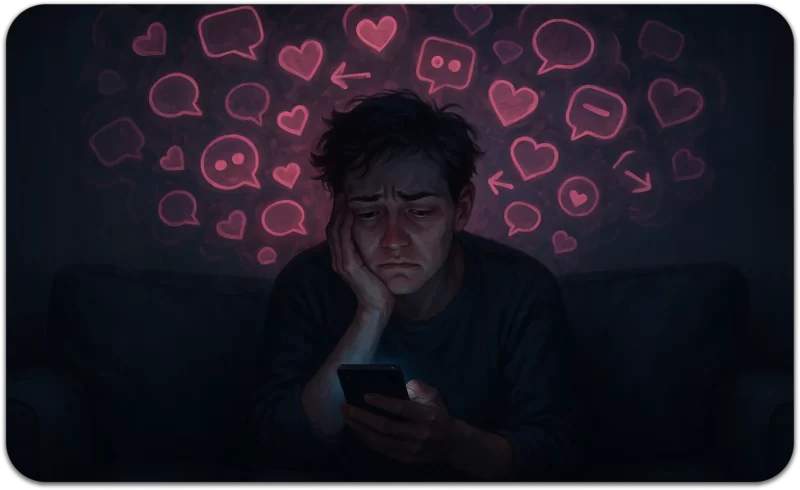
Dating apps have become a central part of the modern dating landscape, but user satisfaction is notably low. Rather than fostering excitement, the act of swiping often leads to fatigue, disappointment, and a sense of burnout. This phenomenon is common enough to have earned a name: dating app burnout. It describes the cycle of endless likes, swipes, and low-effort messages that rarely lead to meaningful interaction, ultimately leaving users feeling drained rather than engaged.
This experience is widespread. Nearly 80% of users report experiencing some level of dating app burnout. The repetitive scrolling and stalled conversations don’t just consume time; they can also negatively affect mental health by increasing anxiety, reinforcing loneliness, and contributing to overall stress.
Despite these challenges, dating apps remain a prevalent way to meet people. The more relevant question is how to use them in a way that preserves your well-being. Mindful strategies, and in some cases professional support from a therapist, can help transform dating from a punishing routine into a more positive experience.
Recognizing Dating App Burnout
Dating apps often introduce a sense of unproductive effort into one’s romantic life. While 39% of people have tried a dating app, only 7% are active users today. This decline is frequently due to the emotional impact of being ghosted, engaging in endless small talk, and having conversations that lead nowhere—all of which can be deeply discouraging and draining. In a culture focused on efficiency, dating apps can start to feel less like a pathway to connection and more like another taxing obligation.
People of all ages use these platforms, but younger generations—Gen Z and Millennials—are particularly affected. Many approach dating like a part-time job, yet 80% of Millennials and 79% of Gen Z report feeling burnt out by online dating. The repetitive cycle of swiping, matching, and messaging can gradually undermine confidence and self-worth when it fails to produce genuine conversation.
The first step toward reclaiming your dating life is acknowledging that apps alone are not a solution. The second is exploring more intentional use and prioritizing real-world connections—your well-being will thank you.
The Impact on Performance and Mental Health
Dating apps do more than cause fatigue; they can actively harm mental health. The constant swiping, the addictive nature of potential matches, and algorithms that prioritize proximity and quick engagement over authentic connection often lead to more frustration than success. With common experiences like ghosting, rejection, and burnout, it’s understandable that many users end up feeling worse, not better.
The apps themselves are also facing challenges. In June 2025, Bumble announced it was reducing its workforce by 30%, a sign that the digital dating boom may be fading. As users increasingly voice frustration with toxic swiping culture, platforms are being forced to reconsider their algorithms and operational models.
However, it is possible to use dating apps in a way that minimizes harm to your mental health. With the right approach, you can pursue new connections while keeping your well-being as a priority.
Mindful Dating: Reducing Stress While Using Apps
Dating should ideally be enjoyable, fulfilling, and healthy. To use dating apps while protecting your emotional well-being, it helps to clarify your personal mental health needs and dating goals. Below are some strategies to maintain balance and avoid burnout:
-
Be intentional about why you are using the apps and how you engage with them
-
Avoid impulsive swiping or messaging
-
Set boundaries to prevent using apps out of habit or boredom
-
Take breaks when needed to give yourself mental rest
-
Remember that your self-worth is not defined by dating outcomes
Romantic Expectations: Online vs. Reality
Dating apps deserve credit for making it easier to meet people outside your usual social circles. However, swipe culture, social media, reality TV, and romantic comedies have also shaped unrealistic expectations about love.
Research supports this: one in three single social media users say that scrolling makes them feel worse about their dating lives. Online and on-screen portrayals of romance set expectations for love at first sight, constant chemistry, and flawless partners—standards that are rarely met in real life, leading to disappointment.
Dating apps can also affect self-image. Modern media promotes unrealistic body standards, leading some to seek unattainable ideals in partners or even to misrepresent themselves online (a practice known as catfishing). In fact, 87% of studies in a review of 16 cross-sectional research projects found a correlation between dating app use and negative body image.
If this feels familiar, you are not alone. Try replacing endless swiping with scheduled check-ins (such as limiting use to a few times per week), reminding yourself that attraction can develop over time, and focusing on connections that feel natural rather than forced. Small adjustments like these can help make dating feel enjoyable again.
Real life may not be like the movies, but you can still be the author of your own dating story—one that includes both awkward moments and meaningful connections.
How Therapy Can Help with Dating App Burnout
Dating can be stressful, exhausting, and overwhelming. A therapist can offer valuable support by providing practical tools, fresh perspectives, and strategies to help you set and maintain healthy dating goals.
Finding the right therapist may seem like another challenging task, but platforms like GoodTherapy can simplify the process. Different backgrounds and identities can shape dating experiences in unique ways, and our network includes professionals who understand diverse lived experiences. You can explore dedicated resources for the BIPOC community and the LGBTQ+ community to find a therapist who aligns with your identity and needs.
Finding Support Through GoodTherapy
Burnout doesn’t have to be the end of your dating journey. Acknowledging the limitations of dating apps and adjusting your expectations are important first steps, but you don’t have to do it alone. GoodTherapy can connect you with mental health professionals who help build confidence, set boundaries, and rediscover what makes dating fulfilling for you.
If you are ready to approach dating on your own terms, consider connecting with a therapist who understands your needs. Your well-being and your romantic life deserve thoughtful care.
Support from GoodTherapy isn’t only for those who are dating. If you are in a relationship or considering marriage, couples therapy can also be beneficial—over 70% of couples report positive outcomes. Visit our marriage counseling page to learn more.
Resources:
Forbes: Forbes Health Survey: 78% of All Users Report Dating App Burnout
AP News: Ever feel exhausted by swiping on dating apps? You might be experiencing burnout
SSRS: The Public and Online Dating in 2025
Science Direct: Dating apps and their relationship with body image, mental health and wellbeing: A systematic review
National Geographic: This is your brain on dating apps
Austin Monthly: As People Pivot from Dating Apps, Bumble Looks to Reinvent Itself
Reuters: Bumble to lay off 30% of global workforce as dating apps struggle
Pew Research Center: Dating and Relationships in the Digital Age
Forbes: Marriage Counseling: What Is It and Does it Work?