

Picture this: You wake up one morning in London, maybe twenty years from now. You check your phone, and the weather app says -20°C. Not in some distant Siberian village, but in the heart of one of Europe’s most temperate cities. The Thames, that lazy brown river that barely freezes, has turned into a solid sheet of ice. Snow drifts pile up against red telephone boxes. Meanwhile, in Athens, olive groves that have stood for centuries are dying not from heat, but from a cold they were never designed to survive.
This isn’t a scene from a disaster movie, though it does sound suspiciously like “The Day After Tomorrow.” This is the scenario scientists have been quietly worrying about for decades. And recently, those worries have gotten a lot louder.
The Ocean’s Heartbeat
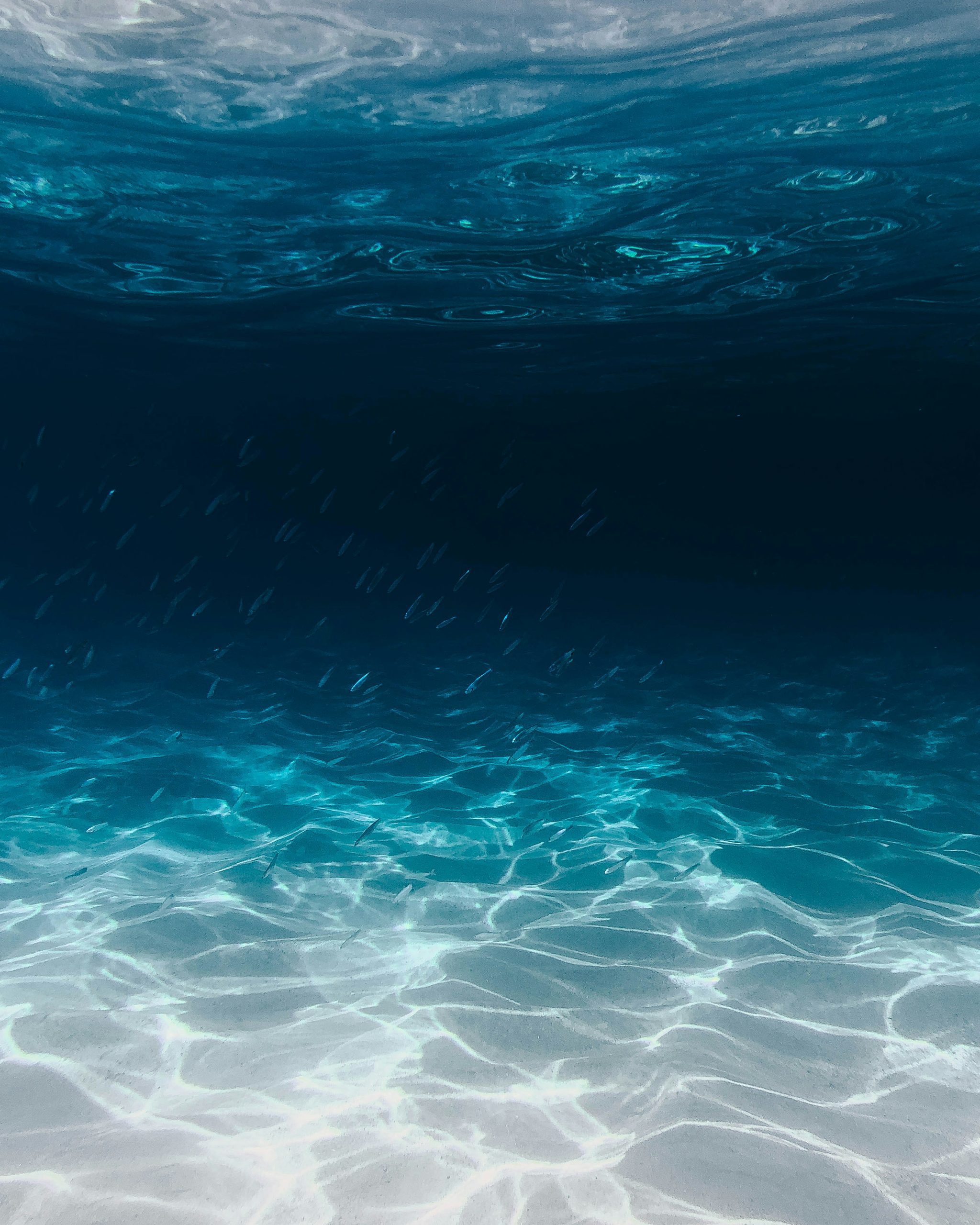
Let’s start with the basics, because this affects all of us whether we live in Oslo or Orlando. The Gulf Stream is part of something much bigger called the Atlantic Meridional Overturning Circulation, or AMOC for short . Think of it as the planet’s circulatory system. It’s a massive ocean conveyor belt that carries warm, salty water from the tropics up toward the North Atlantic, including Europe and the UK .
This is why London, despite being at roughly the same latitude as freezing cold parts of Canada, has relatively mild winters. That warmth is a gift delivered by the ocean. When that warm water reaches the north, it cools, becomes denser, sinks to the bottom, and flows back south, completing the cycle . It’s been doing this for thousands of years, quietly keeping our climate in check.
But here’s the problem that’s keeping climate scientists up at night: this conveyor belt is showing signs of slowing down. And a new report from the Nordic Council of Ministers, published just this month, warns that we need to take the risk of a complete collapse very seriously .
The Salty Warning Signal
You might think the warning signs would be dramatic—huge storms, freak weather events. But the latest red flag is much subtler. It’s about salt.
A new study from the University of Colorado at Boulder has revealed something alarming happening in one of the ocean’s saltiest regions, off the southwest coast of Australia. Over the past 60 years, that area has become 30% less salty . To put that in perspective, the amount of freshwater being added to that region every year is equivalent to about 60% of Lake Tahoe’s volume—enough to supply the entire U.S. population with drinking water for nearly 400 years .
Why should we care about saltiness on the other side of the planet? Because the ocean’s circulation depends on differences in salinity. Salt makes water dense, so it sinks. Freshwater is lighter, so it floats on top. When you dump massive amounts of fresh water into the system—whether from melting ice caps or changing rainfall patterns—you disrupt the whole engine .
The lead author of that study, Professor Weiqing Han, put it plainly: “We’re seeing a large-scale shift of how freshwater moves through the ocean. It’s happening in a region that plays a key role in global ocean circulation” .
The Science Gets Personal
Meanwhile, researchers at the GEOMAR Helmholtz Centre in Germany have been tracking something they call the “age” of North Atlantic waters. Using chemical tracers like CFCs and sulfur hexafluoride (yes, the same stuff used in industrial processes), they’ve discovered that deep waters in the North Atlantic are getting older .
What does water age mean? It’s the time since that water was last in contact with the atmosphere. When the circulation is strong and healthy, surface water sinks quickly, carrying oxygen and heat down into the depths. But when it weakens, that renewal process slows. The water down there just sits, getting older and older.
Their findings, published in Nature Communications, show that across the entire North Atlantic, water masses are significantly older today than they were thirty years ago—by more than a decade on average . The researchers concluded that this trend “cannot be explained by natural variability alone” and represents a clear signal of anthropogenic climate change .
The Russian Roulette of Global Warming
Now for the question everyone wants answered: when could this happen? This is where things get murky and where scientists have healthy disagreements.
Professor Tim Lenton from Exeter University offered a chilling analogy. He told the Daily Mail that at 2°C of global warming above pre-industrial levels, “the odds of AMOC collapse are comparable to Russian Roulette—a one in six chance of a highly damaging outcome” .
Some studies suggest we might be closer than we think. Research published in 2024 indicated that the AMOC could collapse around mid-century, possibly as early as 2060 . But here’s the really unsettling part: because the system has inertia, we might have already passed the tipping point decades ago without knowing it.
Professor David Thornalley from University College London explained this paradox: “New work has suggested that the chance of a collapse is greater than previously thought, simply because we hadn’t examined the results of climate model simulations beyond 2100. It turns out that although most climate models don’t have an AMOC collapse by 2100, many do go on to collapse in the 22nd century, and it is found that the tipping point—the point of no return—was often reached early in the 21st century” .
In other words, we might have already pulled the trigger. We’re just waiting to see if the chamber was loaded.
What a Collapse Would Actually Feel Like
Let’s get concrete about what this means for ordinary people, because the numbers can feel abstract until they land in your backyard.
If the AMOC were to collapse, the effects wouldn’t be uniform. While the rest of the world continues warming, Northern Europe would paradoxically get much colder . A report from the Nordic Council of Ministers warns that London could face winter extremes of -20°C (-4°F), with temperatures in Edinburgh dropping to -30°C (-22°F) . Scotland could see five and a half months of the year below freezing .
Dr. René van Westen from Utrecht University and his colleagues have run the numbers: a northern city like Edinburgh would face 164 days with minimum temperatures below freezing—that’s almost half the year, and an increase of 133 days compared to pre-industrial times . Even Norway’s typically mild west coast could experience winter extremes below -40°C (-40°F) .
But cold isn’t the only problem. A new study from Utrecht University, highlighted by climate scientist Stefan Rahmstorf, warns that an AMOC collapse would also bring severe drought to much of Europe . The dry season could lengthen by up to 72% in Sweden and 60% in Spain. And these dry conditions wouldn’t just last a few years—they could persist for at least a thousand years .
So imagine: colder than Canada in winter, drier than the Sahara in summer, and no end in sight. That’s the future some scientists are warning about.
The Silver Lining (Sort Of)
Here’s some good news buried in all this gloom. A new study published in Nature in January 2026 examined how the AMOC behaved during the last Ice Age . Using fossil data and chemical tracers, researchers confirmed that current climate models accurately predicted that past behavior. This strengthens our confidence that these same models are on the right track in projecting the AMOC’s future .
In other words, we have good reason to trust the warnings. The science is solid. The models work.
What Can We Actually Do?
The Nordic Council of Ministers report, published just this month, lays out a clear action plan . Their key messages are worth paying attention to:
First, we need aggressive emissions reductions. Any additional warming increases the risk. The report states plainly: “Preventing further warming is crucial” .
Second, we need better monitoring. Scientists are calling for an AMOC early warning system that couples observations with model simulations, embedded directly into policy-making processes . The new EU Ocean Act provides opportunities for coordinating this effort.
Third, we need adaptation strategies that account for this risk. As the report notes, an AMOC collapse would trigger impacts that “differ from, and in part oppose, those expected from global climate change” . We need plans that would work whether the AMOC weakens, collapses, or somehow stays stable.
The Bottom Line
Here’s where we stand in February 2026. One of Earth’s major climate systems is showing unmistakable signs of stress. The southern Indian Ocean is freshening at an astonishing rate. North Atlantic waters are aging. The Greenland ice sheet continues to melt, dumping fresh water into the system like someone’s left the hose running.
Scientists don’t agree on exactly when—or even if—a full collapse will happen. But they do agree on the direction of travel. The AMOC is weakening. The risks are real. And as Professor Lenton pointed out, at 2°C of warming, we’re playing Russian Roulette with the climate that has kept Europe livable for millennia.
The Nordic report concludes with a warning that should resonate far beyond the Arctic Circle: “The potential collapse of the AMOC should be treated as a real and significant threat, to which comprehensive risk management frameworks are applied and integrated across all levels of governance” .
In plain language: this isn’t a distant, abstract problem for scientists to argue about. It’s a risk that affects our food, our homes, our children’s futures. The ocean’s heart is beating slower. Whether it stops altogether depends on what we do next.
BY IAN BENSON