

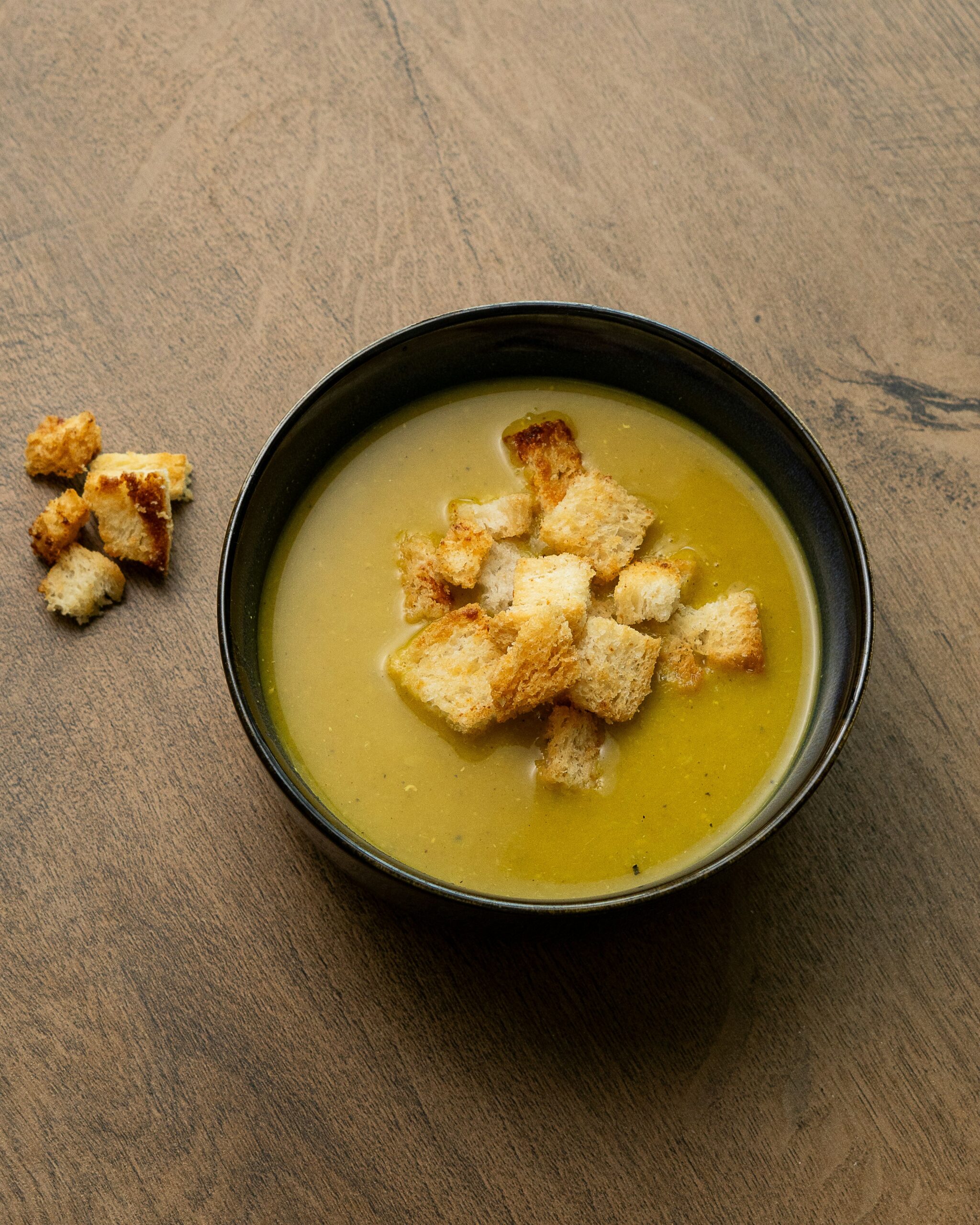
The Can of AI Soup
Imagine, if you will, a can of soup. It looks like soup. It’s packaged like soup. When you open it, it even smells vaguely soup-like. But when you take a spoonful, you realize something is terribly, hilariously wrong. This isn’t your grandmother’s chicken noodle—this is a bizarre concoction that somehow contains both shoelaces and the complete works of Shakespeare, yet lacks even a trace of salt or soul.
This, my friends, is AI Soup.
We’re living in an era where we’re all being served this strange broth daily. It’s in the articles we read, the emails we receive, and especially in the jokes that land with the subtlety of a dropped anvil. Today, we’re not just eating this soup—we’re going to figure out what’s in it, why it tastes so weird, and how we can get back to cooking real meals.
The Recipe for Disaster: Why AI Can’t Do Funny
The Surprise Deficiency
At its core, comedy relies on surprise—that delightful moment when reality takes an unexpected but satisfying turn. AI language models can only mimic the surface patterns of jokes they’ve been trained on, jokes that people have already written. As this one AI system bluntly admitted (yes, I’m anthropomorphizing our eventual destroyers), “AI can simulate empathy, but it isn’t human”.
Think of it this way: AI is that one friend who laughs just a bit too late at jokes, then tells one that makes everyone uncomfortably silent. It can string words together in the shape of humor, but the soul is missing. It’s like a chef who’s read every cookbook ever written but has never actually tasted food.
The Context Catastrophe
Human humor swims in context—shared experiences, cultural nuances, and the beautiful absurdity of everyday life. AI doesn’t understand the frustration of trying to get the bottom sheet corner properly tucked on your mattress. It’s never had corn on the cob stuck in its robot teeth on a nice summer day. It doesn’t know your Aunt Theresa and her tendency to talk over your mother.
As one comedian perfectly captures the AI humor experience: “What do you get if you cross an AI Large Language Model with a comedian? A comic who can do 7,000 impressions, but still has no idea what a banana tastes like”.
Stirring the Pot: The Real-World Consequences
The Deskilling Dilemma
Much like pre-chopped vegetables might eventually make us forget how to wield a knife, over-relying on AI for creative work has a deskilling effect. A study in The Lancet found the potential for a deskilling effect from using AI tools in doctors’ abilities to spot cancer. If AI can mess with doctors’ skills, imagine what it’s doing to our already-questionable ability to craft a decent pun?
The problem isn’t just bad jokes—it’s that we’re outsourcing our creative thinking. As one law librarian beautifully explains, “AI is a tool. It can respond to prompts and provide potentially relevant resources (not answers!)”. Without our brain power to analyze and apply prior knowledge, AI responses are like piles of chopped-up vegetables—they aren’t an answer, they’re just potential parts of an answer.
The “AI Slop” Epidemic
Then there’s what researcher Iris van Rooij calls “AI slop”—those confidently wrong AI definitions and explanations that sound plausible until you actually know something about the topic. It’s particularly dangerous for novices, who might not have the expertise to spot the errors.
This creates a bizarre world where AI confidently tells us things that are “complete fraud in any conceivable way”, and we have to be the grown-ups checking if our soup contains poisonous mushrooms or bars of soap that the helpful robot chef might have accidentally chopped up with the vegetables.
The Human Recipe: How to Avoid Becoming an AI Sous-Chef
Embrace the Tortured Artist (It’s Sexier)
There’s something profoundly unsexy about AI-generated art. As one comedy writer bluntly states: “It’s not sexy for an AI robot to spit out uninspired bullshit. But you know what IS sexy? Pacing outside and muttering stuff at the ground outside because you are a REAL. ARTIST. WHO. CARES”.
Instead of asking ChatGPT to think of your beats, try setting a timer for 25 minutes with just a pen and paper. Let your mind wander to your crazy boss, your sheet-tucking struggles, or your corn-on-the-cob dental dilemmas. You’ll generate more interesting, relatable content than AI because you’ve actually lived it.
Do Your Own Damn Research (Like a Grown-Up)
Yes, Googling things can lead you down rabbit holes, but that’s where the good stuff hides! Instead of using AI for research, try actual research: “Google! Bing! DuckDuckGo! No, I’ve never heard of DuckDuckGo until I wrote this article, but apparently it is an option! Go to the library. Get a book. Get an e-book. Talk to people who have had direct experience with what you’re writing about”.
When you encounter AI overviews in search results, go directly to the sources that AI is referencing. Often, you’ll discover it’s wrong, and the source doesn’t contain the information at all.
Talk to Actual Humans (What a Concept!)
Instead of asking a chatbot to pretend to be different people to help with dialogue, try this radical approach: “Go outside. Take a walk. Listen to people. Talk to real people. In person. On the phone. Look around at the world”. Real people provide nuance that AI can’t import from the web.
Similarly, instead of running your piece through ChatGPT for feedback, get involved in a writing community. Ask friends and family—even non-writers can provide valuable perspectives on what makes sense and what’s actually funny.
The Last Spoonful
At the end of the day, AI soup will never satisfy like a home-cooked meal because, as our wise law librarian friend reminds us, “AI can’t make soup”. It can chop the vegetables, it can even follow a recipe, but it can’t apply cognitive processes and prior knowledge to transform those ingredients into something nourishing for the human soul.
So the next time you’re tempted to reach for that convenient can of AI soup, remember: you are a red-blooded sack of flesh with unique experiences, questionable relatives, and your own weird thoughts about mattress sheets. You’ve had pleasure and pain, joy and disappointment, corn stuck in your teeth and sheets that won’t stay tucked.
That’s your special ingredient. That’s what makes your soup—and your writing—worth consuming.
Now if you’ll excuse me, I have some muttering to do at the ground outside. This artist has work to do.